Saturday, May 29, 2021

The Jesus Prayer and Six Promises of God: The Fifth Promise


Parts I, II, III, and IV can be found here, here, here, and here, respectively.

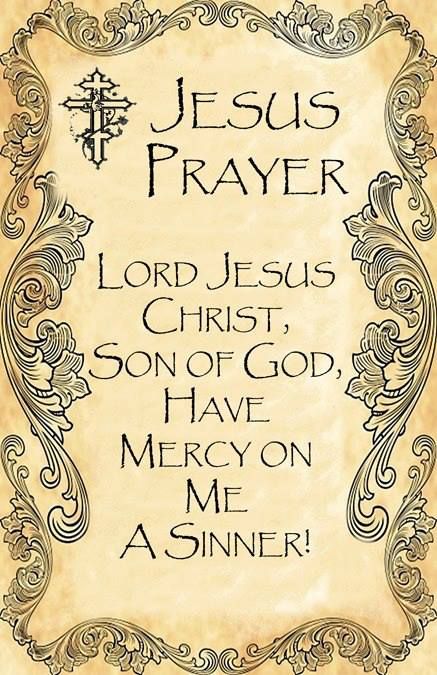
The full form of the Jesus Prayer, “Lord Jesus Christ, Son of God, have mercy on me, a sinner,” incorporates at least six biblical promises. These are:


1. Romans 10:9 — If you confess with your mouth the Lord Jesus and believe in your heart that God has raised Him from the dead, you will be saved. (cf. John 6:40; Romans 10:10-13)


2. 1 Corinthians 12:3 — No one can say “Jesus is Lord” except in the Holy Spirit. (cf. John 15:26)


3. 1 John 5:1 — Everyone who believes that Jesus is the Christ has been born of God, and everyone who loves the Father loves whoever has been born of him. (cf. Matthew 16:16-17)


4. 1 John 4:15 — Whoever confesses that Jesus is the Son of God, God abides in him, and he in God. (cf. Romans 8:16-17; 1 John 2:23, 5:10)


5. John 14:14 — If you ask me anything in my name, I will do it. (cf. John 14:13, 15:16, 16:23-24) 


6. 1 John 1:9 — If we confess our sins, he is faithful and just to forgive us our sins and to cleanse us from all unrighteousness. (cf. Luke 18:14)


On the Fifth Promise


At its core, asking something in Jesus’ holy Name means being in harmony with His will, which is also to say His greater wisdom, authority, and power. It is founded upon the divine promise given by Christ. This, being a promise, means that it can be relied upon to be upheld by His unwavering faithfulness. This excludes the idea that it is the reduction of Christ to being a genie. The word genie comes from an old Arabic word, jinn, referring to a kind of supernatural being, a term which came into English usage through translations of the Arabian Nights where a jinn was being manipulated to grant selfish wishes. God is not anything like a jinn, for He is the Almighty Creator of all, the thrice Holy One who maintains all things by the Word of His power (Hebrews 1:3). Moreover, as one who Covenants with His People, God does not promise to accomplish anything in His Name that is not also consistent with His holy nature and righteous character. We have to recall that the promise of Christ to do anything asked in His Name extends to those who are in and with Him. This occurs inexorably through the sacrament of holy Baptism, which is first and foremost a dying to self, a putting off of all worldly ways. Many people mistakenly think they can be a Christian and yet also at the same time a self-willed manmukh. An old Punjabi word, a manmukh is a person who follows their own mind and desires, without regard to God’s truth. This kind of person prizes their own thoughts, or the collective thoughts of their family or tribe, placing them above the revealed thoughts of God as given in His holy Word, the Bible, and as consistently maintained in the Church. This kind of person, when they encounter God’s promise to do something for His children when they pray in His Name, start to approach God as if He were simply there to guarantee that their selfish or tribal will is accomplished. When God resists their pride they end up blaming God for not obeying them, and so enter into all sorts of blasphemy. This precious promise of God is thus wholly for those who approach Him in faith as His obedient child. For in approaching God in Christ, it is not enough to simply be a socially “good” person, one must be His the Father's holy child by adoption into Christ Jesus His Son. But, if one approaches in humble faith, seeking God’s will and glory, then they can with all confidence ask in His Name, and He will do it. It may not be answered in an expected way, an obvious way, or an easy way, but it will be answered. For the most fundamental desire of a child of God is to be holy as He is holy, to seek to do His will in all things, and doing all for His glory.


Friday, May 21, 2021

The Jesus Prayer and Six Promises of God: The Fourth Promise

Parts I, II, and III can be found here, here, and here, respectively.

The full form of the Jesus Prayer, “Lord Jesus Christ, Son of God, have mercy on me, a sinner,” incorporates at least six biblical promises. These are:


1. Romans 10:9 — If you confess with your mouth the Lord Jesus and believe in your heart that God has raised Him from the dead, you will be saved. (cf. John 6:40; Romans 10:10-13)


2. 1 Corinthians 12:3 — No one can say “Jesus is Lord” except in the Holy Spirit. (cf. John 15:26)


3. 1 John 5:1 — Everyone who believes that Jesus is the Christ has been born of God, and everyone who loves the Father loves whoever has been born of him. (cf. Matthew 16:16-17)


4. 1 John 4:15 — Whoever confesses that Jesus is the Son of God, God abides in him, and he in God. (cf. Romans 8:16-17; 1 John 2:23, 5:10)


5. John 14:14 — If you ask me anything in my name, I will do it. (cf. John 14:13, 15:16, 16:23-24) 


6. 1 John 1:9 — If we confess our sins, he is faithful and just to forgive us our sins and to cleanse us from all unrighteousness. (cf. Luke 18:14)


On the Fourth Promise

He who confesses from the heart that Jesus is the Son of God has God abiding in him. In other words, God abiding in a man makes this confession possible. True confession is the result of God’s holy operation in the soul. And the opposite is also true: “Who is a liar but he that denieth that Jesus is the Christ? He is antichrist, that denieth the Father and the Son. Whosoever denieth the Son, the same hath not the Father” (1 John 2:22-23). In other words, those who do not confess Jesus as the Son do not have God as their Father, and in fact are opposed to the truth. And for a confession to be an authentic confession, it is not simply a matter of moving the lips, but having the heart moved by the Gospel. The heart moved by the Gospel is the heart moved by the power of God, for "the Gospel is the power of God unto salvation to everyone that believeth" (Romans 1:16). In this way the Gospel is the way of being in right relationship with divine reality. The Gospel is therefore not merely a religious message, and Christianity is not merely one way among others. There aren’t multiple true religions. One is either with Christ and God, or against Christ and God. For the whole world labors under the condemnation of sin, willingly bound to hell. But into this great spiritual slavery to evil God the Father sent His Only-Begotten Son. Christ is in this way the mercy of God extended. He is not merely a wise teacher, nor merely a miracle worker, nor merely an enlightened being. He is Himself Salvation, and He entered into the world in order to deliver those who believe in His Name. That is why Scripture says, “Neither is there salvation in any other: for there is none other name under heaven given among men, whereby we must be saved” (Acts 4:12). And so it is not simply that Christianity is a better system of ideas. It is the reality of God’s Personal in-breaking into the world to save man from a very real bondage to sin unto death and from a very real bondage to a very real Satan. Thus it cannot be said that there is no salvation in any other name as if God loves only Christians. That view of religion fails to touch the depth of the reality of the Incarnation. Christ is Himself the love of God, who is God, who came into the world to save sinners via their incorporation into Him through confessed faith, for that confession is a participation, an abiding, in Him. This promise is therefore most wonderful, for “this is the promise that he hath promised us, even eternal life” (1 John 2:25).

Ancient Witness: The Authenticity of the Last Twelve Verses of the Gospel of Mark

Multiple and perhaps even most modern translations of the New Testament, such as the ASV, RSV, NASB (77 and 95), NIV, ESV, NET, and CSB, in some way indicate that Mark 16:9-20 are not original to Mark's Gospel. They do this in different ways, whether by placing these verses within square brackets and adding a footnote explaining their doubtful character, placing them in all italics, or perhaps inserting a note directly between verses 8 and 9 that says they "may" not be original. 

In this way they cast doubt on their trustworthiness, and as a consequence cast doubt on whether these verses are authentically God's Word. They do this further by stating that "some" early manuscripts do not contain them, or that there are no early witnesses to them, or they baldly say they were "added" or "inserted" at some later date. Thankfully, we can know that they are incorrect.

We can know because St. Irenaeus, providentially, referred to this section of Scripture directly and explicitly. A faithful Christian theologian and apologist, St. Irenaeus lived in the Second Century, was born and raised in Asia Minor, and became a bishop of Lyon, in Gaul. Thus he had deep experience in both the Eastern and Western geographical territories of the Roman empire, and so was in an extremely good position to be cognizant of what constituted the authentic ending of the text of Mark's Gospel. He wrote:

[T]owards the conclusion of his Gospel, Mark says: "So then, after the Lord Jesus had spoken to them, He was received up into heaven, and sitteth on the right hand of God;" (Against Heresies, Book 3, Chapter 10, para. 5; Ante-Nicene Fathers, Vol. 1, eds. Roberts and Donaldson, Revised by Coxe, (Christian Literature Publishing Company, 1885), pg 426 )

That is a direct quotation of Mark 16:19, which in the Authorized Version is translated:

So then after the Lord had spoken unto them, he was received up into heaven, and sat on the right hand of God. (Mark 16:19)

Notice that St. Irenaeus does not simply quote this verse, but specifically describes its source as being from the conclusion of Mark's Gospel. For those who are interested in the Latin (the original Greek of St. Irenaeus' text is lost), it reads:

In fine autem Evangelii ait Marcus: "Et quidem Dominus Jesus, postquam locutus est eis, receptus est in cælos , et sedet ad dexteram Dei;" (Patrologia Graeca, vol. 7, Irenaeus, paragraph 188)

Interestingly, the foregoing Latin reads differently than the Vulgate (late 4th Century) rendering of that same Markan verse, indicating that this was not a later insertion into the text of Irenaeus: 

et Dominus quidem postquam locutus est eis adsumptus est in caelum et sedit a dextris Dei (Mark 16:19)

The resulting conclusion is necessary: Providentially, we have a definitive early witness from the Second Century that explicitly identifies Mark's Gospel as ending ("in fine") well beyond verse 8. Not only this, the verse being quoted by St. Irenaeus indicates Jesus' prior speech to the Eleven Disciples, which is also providentially to affirm the intervening verses between 8 and 19. This shows that the place (not the "insertion") of those verses into Mark's Gospel are certain and necessary, and that to cast doubt on their presence is problematic, to say the least. 

As a common logical fallacy is popularly summarized, absence of evidence is not evidence of absence, and so the fact that "some early manuscripts" may not contain those verses is not conclusive evidence that they were never there. And, as shown above, St. Irenaeus' witness to their positive presence at such an early date defeats the argument that they were a later insertion. 

Moreover, the translation into English of St. Irenaeus given above is from the year 1885, post-dating the doubt cast upon those verses by the famous textual scholars, Westcott and Hort, in their 1881 Revised Text (which is the grandfather of the eclectic Greek texts from which most modern translations are taken). This not only vindicates the Majority and the Received Texts on this point, but also means that the affirmation of the integrity of the last twelve verses of Mark has been available for over a century. And yet still the (false) claim persists that there is not a definite, reliable witness to their presence. 

Therefore, the modern translations which cast doubt on those verses would do well to remove any indication that they may not be original, or at the very least notate that they do indeed have some of the earliest and best Patristic witnesses to their genuineness (since the earliest extant copies of Mark's Gospel are well over a century after St. Irenaeus).

Saturday, May 8, 2021

The Jesus Prayer and Six Promises of God: The Third Promise

Parts I and II can be found here and here, respectively.

The full form of the Jesus Prayer, “Lord Jesus Christ, Son of God, have mercy on me, a sinner,” incorporates at least six biblical promises. These are:


1. Romans 10:9 — If you confess with your mouth the Lord Jesus and believe in your heart that God has raised Him from the dead, you will be saved. (cf. John 6:40; Romans 10:10-13)


2. 1 Corinthians 12:3 — No one can say “Jesus is Lord” except in the Holy Spirit. (cf. John 15:26)


3. 1 John 5:1 — Everyone who believes that Jesus is the Christ has been born of God, and everyone who loves the Father loves whoever has been born of him. (cf. Matthew 16:16-17)


4. 1 John 4:15 — Whoever confesses that Jesus is the Son of God, God abides in him, and he in God. (cf. Romans 8:16017; 1 John 2:23, 5:10)


5. 1 John 1:9 — If we confess our sins, he is faithful and just to forgive us our sins and to cleanse us from all unrighteousness. (cf. Luke 18:14)


6. John 14:14 — If you ask me anything in my name, I will do it. (cf. John 14:13, 15:16, 16:23-24)


On the Third Promise


Belief in Jesus as the Christ requires a supernatural act of God vivifying the soul to this truth. It is the necessary second birth, without which we cannot see the Kingdom of God. As Jesus teaches: “Do not marvel that I said to you, ‘You must be born again’” (John 3:7). For, “Truly, truly, I say to you, unless one is born again he cannot see the kingdom of God” (John 3:3). This rebirth is so important, but what does it entail? It entails the recognition of Jesus as your life. Not that He is merely important to your life, a central part of your life, or even that He is the purpose of your life, but that He Himself is your life. As He declares: “I am the resurrection and the life. He who believes in Me, though he may die, he shall live” (John 11:25). Notice three elements in that verse: (1) Jesus is the life, (2) those who believe in Him, (3) will live. In other words, since belief receives Jesus, and Jesus is the life, to receive Jesus is to receive the life. He is and becomes in experience the substance of the Christian’s life. One is thus born again, regenerated by the life that is Jesus Christ; one is born of God, what He also declares is being “born of the Spirit” (John 3:8). This is the context and substance of that most famous of bible verses: “For God so loved the world that He gave His only begotten Son, that whoever believes in Him should not perish but have everlasting life” (John 3:16). That is why St. John the Forerunner can say: “He who believes in the Son has eternal life; and he who does not believe the Son shall not see life, but the wrath of God remains on him” (John 3:36). Notice how wrath is said to remain or abide on those who do not believe. It is thus not that God punishes those who do not believe in Christ by depriving them of life; it is that (1) Christ Himself is eternal life, (2) believing in Him is receiving He who is Himself eternal life, (3) not believing in Christ means not having Him, which means (4) those do not believe do not have eternal life. What is rather the case is that divine wrath remains on those who do not believe. Christ is the instrument of deliverance from wrath, as St. Paul teaches: “Since, therefore, we have now been justified by his blood, much more shall we be saved by him from the wrath of God” (Romans 5:9), “Jesus who delivers us from the wrath to come” (1 Thessalonians 1:10). This is why the promise is so especially precious and incomparable, for it is the divine promise of the eternal life we hope for from the bottom of our hearts. This life is Jesus Himself, and is received by faith in such a way that one is a new creation, for “if anyone is in Christ, he is a new creation. The old has passed away; behold, the new has come” (2 Corinthians 5:17).

Friday, April 23, 2021

The Jesus Prayer and Six Promises of God: The Second Promise

(The present article follows upon the previous, which speaks to the first promise listed below.)


The full form of the Jesus Prayer, “Lord Jesus Christ, Son of God, have mercy on me, a sinner,” incorporates at least six biblical promises. These are:


1. Romans 10:9 — If you confess with your mouth the Lord Jesus and believe in your heart that God has raised Him from the dead, you will be saved. (cf. John 6:40; Romans 10:10-13)


2. 1 Corinthians 12:3 — No one can say “Jesus is Lord” except in the Holy Spirit. (cf. John 15:26)


3. 1 John 5:1 — Everyone who believes that Jesus is the Christ has been born of God, and everyone who loves the Father loves whoever has been born of him. (cf. Matthew 16:16-17)


4. 1 John 4:15 — Whoever confesses that Jesus is the Son of God, God abides in him, and he in God. (cf. Romans 8:16017; 1 John 2:23, 5:10)


5. John 14:14 — If you ask me anything in my name, I will do it. (cf. John 14:13, 15:16, 16:23-24)


6. 1 John 1:9 — If we confess our sins, he is faithful and just to forgive us our sins and to cleanse us from all unrighteousness. (cf. Luke 18:14)


On the Second Promise

To truly say that Jesus is Lord is to enliven to and recognize the reality of His Lordship. This recognition is a state of soul awakened by the Holy Spirit through the implanted word via the preaching of the Gospel, as St. Peter teaches, "since you have been born again, not of perishable seed but of imperishable, through the living and abiding word of God... And this word is the good news that was preached to you" (1 Peter 1:23, 25). For if one is outside of the Holy Spirit they cannot recognize Christ’s Lordship, because it is precisely the action of the Holy Spirit to awaken the soul to Christ, as Christ Himself teaches: “When the Helper comes, whom I will send to you from the Father, the Spirit of truth, who proceeds from the Father, he will bear witness about me” (John 15:26). In other words, when a person submissively recognizes the Lordship of Christ, it means that the Holy Spirit is present and active. This is of the essence of salvation, and is why St. Paul can speak so boldly when he declares: “You, however, are not in the flesh but in the Spirit, if in fact the Spirit of God dwells in you. Anyone who does not have the Spirit of Christ does not belong to him” (Romans 8:9). What this means is that for you to recognize the Lordship of Jesus Christ is for you also to be in the Holy Spirit, and likewise to be in the Holy Spirit is to have the Holy Spirit in you, and to thus have the Holy Spirit is to belong to Christ. This mutual indwelling hearkens to Jesus’ astounding high priestly prayer, “that they may all be one, just as you, Father, are in me, and I in you, that they also may be in us, so that the world may believe that you have sent me. The glory that you have given me I have given to them, that they may be one even as we are one, I in them and you in me, that they may become perfectly one, so that the world may know that you sent me and loved them even as you loved me” (John 17:21-23). Notice how Christ speaks of the Father being in Him, and how He is in the Father. This points to the fundamental holy unity of Father and Son, of God and Word, and yet points further to the nature of our union with God in Christ, for Christ prays that we will be in the Father and in Him, and He in us and therefore the Father in us. This is the breadth and length and height and depth of our salvation! For we are not merely delivered from sin, even though that is a truly awesome deliverance. And we are not merely written into the Book of Life, although that is truly an awesome inscription. We are, rather, made to have complete union with God the Father, God the Son, and God the Holy Spirit, to share in the eternal bond of their light, their life, and their love. This is the reality pointed to and participated in through our praying of the Jesus Prayer. Therefore, when you call upon Jesus as Lord, submitting to His Lordship, trust in God’s promise and know that through the strength of God’s promise that the Holy Spirit is in you, and you are in Him.

-Fr. Joshua Schooping

Saturday, April 17, 2021

The Jesus Prayer and Six Promises of God: The First Promise

The full form of the Jesus Prayer, “Lord Jesus Christ, Son of God, have mercy on me, a sinner,” incorporates at least six biblical promises. These are:


1. Romans 10:9 — If you confess with your mouth the Lord Jesus and believe in your heart that God has raised Him from the dead, you will be saved. (cf. John 6:40; Romans 10:10-13)


2. 1 Corinthians 12:3 — No one can say “Jesus is Lord” except in the Holy Spirit. (cf. John 15:26)


3. 1 John 5:1 — Everyone who believes that Jesus is the Christ has been born of God, and everyone who loves the Father loves whoever has been born of him. (cf. Matthew 16:16-17)


4. 1 John 4:15 — Whoever confesses that Jesus is the Son of God, God abides in him, and he in God. (cf. 1 John 2:23; Romans 8:16-17)


5. John 14:14 — If you ask me anything in my name, I will do it. (cf. John 14:13, 15:16, 16:23-24)


6. 1 John 1:9 — If we confess our sins, he is faithful and just to forgive us our sins and to cleanse us from all unrighteousness. (cf. Luke 18:14)


 On The First Promise

Calling on the Name of the Lord is of the essence of Christian faith, because it is fundamentally a looking away from self and a looking towards God. And God’s promise to save those who call on Him in faith and truth, being irrevocable, make calling on the Name of God perhaps the most fundamental religious act of Christianity. Christ also promises: “And I, when I am lifted up from the earth, will draw all people to myself” (John 12:32). In other words, the inward drawing towards Christ that the faithful experience in their heart is in truth caused by, is the result of, Jesus’ drawing of them to Himself. To be more pointed, faith itself is a gift of God’s drawing, as received through the preaching of the Gospel, as St. Paul indicates: “For by grace you are saved through faith, and this is not from yourselves, it is the gift of God” (Ephesians 2:8). In other words, faith itself is a gift of God divinely worked into the human heart, as St. John Chrysostom affirms, commenting on the just-quoted passage: “Neither is faith, he means, ‘of ourselves.’ Because had He not come, had He not called us, how had we been able to believe? For ‘how,’ saith he, ‘shall they believe, unless they hear?’ (Romans 10:14) So that the work of faith is not our own.” Blessed Theophylact likewise teaches on this verse, that “not even our faith originates from us,” and that “even the faith itself which we have shown is a gift from God.” This is made possible because the Gospel is itself “God's power for salvation to everyone who believes” (Romans 1:16). Moreover, “if thou shalt confess with thy mouth Jesus as Lord, and shalt believe in thy heart that God raised him from the dead, thou shalt be saved” (Romans 10:9). But saved from what? The wrath of God which is to be revealed on the Last Day, as St. Paul teaches of “Jesus, who delivers us from the wrath to come” (1 Thessalonians 1:10). Faith in the risen Christ therefore delivers us from the wrath of God against sin: “For the wrath of God is revealed from heaven against all ungodliness and unrighteousness of men, who by their unrighteousness suppress the truth” (Romans 1:18). In this light, calling faithfully on the Name of the Lord is a wonderful and precious promise. It is no trifle, for God’s promises are irrevocable. Therefore, call upon God ceaselessly as His gift of faith is worked into your heart. Let this faithful calling be a constant attitude of your soul, so that you might live the New Life in Christ more and more fully until the coming Day, “that day when, according to my gospel, God judges the secrets of men by Christ Jesus” (Romans 2:16). And that you be found among the saints “together with all those who in every place call upon the name of our Lord Jesus Christ, both their Lord and ours” (1 Corinthians 1:2).


-Fr. Joshua Schooping

Tuesday, March 30, 2021

The Biblical Case for Why Masks in the Church Assembly are Unethical

Following the previous articles, here and here, which treat of fundamental issues regarding any purported relationship between Covid and the Church, another much overlooked reason why masks are inappropriate in the Church assembly is that it violates a basic principle of God’s Law.


Leviticus chapters 13 and 14 give the Lord’s instruction on how to treat those who may be sick with an infectious disease. In short, those sick or potentially sick with an infectious disease are always instructed to be quarantined. The basic principle is given thus:

And the priest shall examine the disease and shut up that which has the disease for seven days. (Leviticus 13:50; cf. Leviticus 13:4-5, 21, 26, 31, 33, 54)

Furthermore:

He shall remain unclean as long as he has the disease. He is unclean. He shall live alone. His dwelling shall be outside the camp. (Leviticus 13:46)

In other words, the medical principle is that of quarantining the sick. Moreover, the sick may require some sort of marker to identify them as sick, so that people know to be careful:

The leprous person who has the disease shall wear torn clothes and let the hair of his head hang loose, and he shall cover his upper lip and cry out, 'Unclean, unclean.' (Leviticus 13:45)

Not only are his clothes and hair to reflect his condition, notice also that he is supposed to cover his upper lip, which could be construed as a kind of masking. It shows an awareness of infectious diseases passable through the nose and mouth to others.


The fundamental distinction at play here is between clean and unclean:

And the priest shall examine him again on the seventh day, and if the diseased area has faded and the disease has not spread in the skin, then the priest shall pronounce him clean; it is only an eruption. And he shall wash his clothes and be clean. (Leviticus 13:6; re: clean, cf. Leviticus 13:13, 17, 23, 28, 34, 37, 39-41, 58-59; re: unclean, cf. Leviticus 13:3, 8, 11, 14-15, 20, 22, 25, 27, 30, 36, 44-46, 51, 55, 59)

Nowhere do we see those without symptoms commanded to dress or be treated as if they are sick.


We do have a case where the clean are commanded to leave the location of a possible unclean disease: 

Then he who owns the house shall come and tell the priest, "There seems to me to be some case of disease in my house." Then the priest shall command that they empty the house before the priest goes to examine the disease, lest all that is in the house be declared unclean. And afterward the priest shall go in to see the house. (Leviticus 14:35-36)

But this does not connect even remotely to the principle of marking the sick with torn clothes, loose hair, or face covering. It also shows that the clean, who were in the presence of a potentially unclean location, were not instructed to quarantine themselves or take the markers of uncleanness. Nor do we see the priest being commanded to cover his face.


What is implicit in the distinction between clean and unclean is the idea of separation. In other words, clean and unclean should not be confused. What is diseased is to be distinguished from the apparently well, and they are not to be treated alike. The markers of the clean are not to be given to the unclean, nor the markers of the unclean to the clean. It is similar to men’s and women’s clothing:

A woman shall not wear a man's garment, nor shall a man put on a woman's cloak, for whoever does these things is an abomination to the Lord your God. (Deuteronomy 22:5)

Confusion of such fundamental distinctions is an abomination, which is a principle at the heart of God’s condemnation of homosexuality:

You shall not lie with a male as with a woman; it is an abomination. (Leviticus 18:22)

And:

If a man lies with a male as with a woman, both of them have committed an abomination; they shall surely be put to death; their blood is upon them. (Leviticus 20:13)

In other words, the Biblical point at hand is that to confuse what God distinguishes, or to separate what God sees as one (as the concept of race implicitly does to humanity), both alike are an abomination. Thus, to put the markers of the unclean on the clean is similarly abominable:

You shall keep my statutes. You shall not let your cattle breed with a different kind. You shall not sow your field with two kinds of seed, nor shall you wear a garment of cloth made of two kinds of material. (Leviticus 19:19)

Notice that not even the wearing of a cloth garment made of two kinds of material accords with divine law, the point again being to understand that God’s will is unto the preservation of the integrity of each class of persons, animals, and things.


Therefore, at the very least, it is unbiblical to ask people who have no symptoms of an infectious disease to dress in the clothes of those possessing infectious diseases. And to compel them to wear them is godless and unethical.


Lastly, as a final consideration, those who stray from the principle of Christian love and freedom and therein seek to compel God’s people to wear masks in the assembly, not only contrary to the spirit of God’s Law, thereby also break the law of love, for love “does not insist on its own way,” and moreover “bears all things, believes all things, hopes all things, endures all things” (1 Corinthians 13:5, 7).


-Fr. Joshua Schooping