Showing posts with label Apologetics. Show all posts

Saturday, October 24, 2020

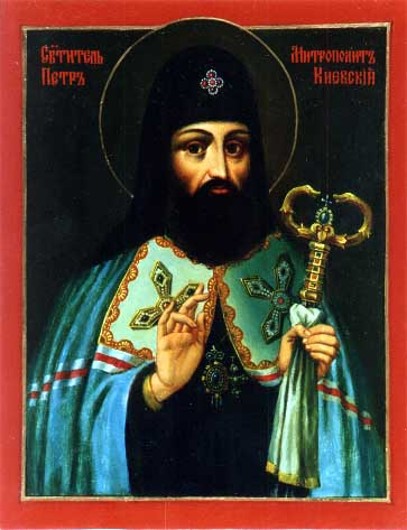
A Short Defense of St. Peter Mogila's Catechism

In the 20th and 21st centuries, as the Orthodox Church in the Anglophone world was deeply engaging with the Church Fathers, translating Patristic and Liturgical texts, it became popular among some to criticize St. Peter Mogila's 17th Century Catechism. There were moments when some Orthodox theologians could be heard declaring that Orthodox Christianity doesn't even "do" systematic theology. In this light, St. Peter's Catechism was seen as too Western, too capitulated to Romanism, and therefore it can be safely ignored and set aside as, at best, a curiosity that bears no meaningful authority.

The problem with this attitude towards the Catechism is that it is truly self-defeating. In order to criticize St. Peter Mogila's Catechism, one ends up criticizing its conciliar nature, and so conciliarity itself. For the document was amended and formally received by the four highest Patriarchates: Constantinople, Alexandria, Antioch, and Jerusalem. Furthermore, it was officially received at the Particular Council of Jerusalem in 1672 held under Patriarch Dositheus. To criticize St. Peter's Catechism is then to criticize these Fathers, to criticize the conciliar nature of its unanimous acceptation, and so to say that the whole Church was capitulated to Romanism. For it is not merely St. Peter Mogila's Catechism; it is claimed as the Catechism of the Orthodox Church itself. What is worse, this criticism ends up treading upon the promise of Christ to the Church, that She cannot fail, and so moves in the direction of unraveling the very fabric of Orthodox ecclesiology.

The Church has never been captive to the Latins. Therefore, for Orthodox Christians to be skeptical towards St. Peter Mogila is for them to be skeptical of the Orthodox Church, and this ends up becoming truly self-defeating. If, in light of its conciliar and formal acceptance, we cannot wholeheartedly embrace and trust the Catechism, then we cannot embrace and trust the Church which produced it and unanimously declared its canonicity, and then, finally, we cannot even trust the contemporary theologians who sought to criticize it. If we cannot trust St. Peter Mogila, and the Patriarchs and Councils which formally approved his Catechism, then we certainly should not trust some 20th or 21st Century theologian who seeks to minimize and diminish its importance. Rather, it looks like those who seek to criticize it have placed themselves in a position contrary to the phronema of the Orthodox Church.

-Fr. Joshua Schooping

Monday, October 19, 2020

Man, Nothingness, and Being: A Short Reflection on How the Gospel Might Speak to Atheism

Man is created in the image of God ex nihilo, out of nothing, and so in a sense when he looks honestly into his soul man sees a double reality: on the one hand the fact of an infinite gaping nothingness, and on the other hand the infinite embracing reality of Being. This internal tension demands and takes an enormous toll on his psyche, and in his fallen state man is ever striving towards being, as if standing precariously on and gripping an impossible incline, ever fearing lest he slip into the bottomless nothingness which he senses, if not recognizes, within himself deep below.


At times the nothingness can appear almost sweet, like an infinite ease, while at other times terrifying in its overwhelming power to destroy, through a kind of inexorable negating power of absence, all meaning, connection, and value. Similarly, at times Being can be reassuring, affirming, and uplifting (as out of the nothing), while at other times seem impossible in its rigid demands, its edges and consequences, terrifying in its overwhelming, overshining presence, like a terrible judge ever threatening to pronounce guilt at one’s inability to live up to reality’s infinite realism. In certain moments these two can seem almost to coalesce, to become as if one, where total absence is an infinite presence, and infinite presence a space beyond the cacophony of things, i.e. of matter and form. 


The urge to atheism that some feel is just this thirsting for truth, real truth, as a radical denial of all pious opinions and romantic ephemera, the urge to acknowledge as meaningful the absolute nothingness which appears as such an inextricable part of one’s experience of being (however paradoxical that may sound). Atheism, in this nearly religious sense, is the denial of infinite Being in favor of infinite nothingness. It is finally a kind of mystical nothingness which moves, even bizarrely and as if against the will of the atheist, towards the recognition of a transcendental fecundity at the heart of all such nihilism. This is the path out of atheism by taking the path through atheism, to recognize that beyond all mythologies and speculations there is a bedrock of reality that, often frustratingly, demands recognition. The reality of nothingness finally becomes reality, becomes presence.


From this vantage, and for some perhaps only from this vantage, one is at last able to see that what was once a pervasive absence is now a pervasive presence, and it becomes undeniable that there is a positive reality which pervades all things, and that this has always been so. In this one is even able to see that at the heart of religious faith there is a kernel of truth, one inadequately married to name and form, to be sure, but one to which name and form can become translucent, transcendental reality accommodating itself to the imperfect minds of men. 


This transcendental reality, moreover, has produced time and space, and so pervades all things while not being touched by them. This transcendental reality even has all power. It stands beyond all name and form, all time and space, all laws and all entropy, and in this the true meaning of God starts to dawn on the mind: That which is beyond, but also within, for in this Truth we live and move and have our being. And even here insight is not exhausted, because, beyond the vagaries of personality, the personhood that stands at the heart of our experience is no longer perceived as merely accidental, but reflective, like a deep echo, of what is true at even the most fundamental level of reality. And so transcendental reality is known not merely as an It, but as Person, and here one stands at the threshold of the transcendental Trinity of Persons: the Origin, the Logos, and the Spirit.


Having created all reality, its very Master, the Logos is able to enter into time and space. Almost as if the Dreamer had entered into his own dream, He entered into the stream of history, time and space offering no resistance to Him. For how could they? And so, having lived perfectly according to the laws of nature, and sensitive to their origin beyond time and space, after dying miserably on a cross it were as nothing for Him to transcend them, as if mocking the law of death that governs all things in this world, by rising from the dead, manifesting the mastery of Being over nothingness. This message echoes throughout the world, that conquering death through dying, passing through nothingness Being is victorious, both in time and in eternity, on earth as it is in heaven: This being the recapitulation of the insight that Being is the fundamental Truth, and that even nothingness gives way to He Who Is.


-Fr. Joshua Schooping


Sunday, February 2, 2020

The Reality Signifying Logos: A Semiological Argument for the Existence of God

Atheists ask for evidence. Evidence is semiotic, it functions by signification. For example, a falling object is not itself gravity, and so as evidence of gravity the falling object functions semiotically as a sign of gravity. Gravity itself, therefore, is not known directly by the senses, and so is not directly empirical. The empirical aspect of gravity functions according to signification, i.e. it is semiotic.


What would evidence of God be? Well, the concept of God includes that it (the concept) points to a reality not contained within the empirical realm. Like gravity, God cannot, in principle, be verified directly, cannot be directly perceived by the senses. Therefore, evidence for God must also be semiotic.


Moreover, God, as a concept, includes many aspects that are distinct, and so to provide reasonable evidence for what the conceptual sign points to could not therefore mean providing exhaustive evidence for all that is ascribed to God. Only certain attributes can be reasonably treated at any given time. A proof of God's love, for example, is not the same as a proof of His existence. The semiotic evidence, in other words, must be suited to the attribute.


Now, the evidence demanded by naturalists is not God's love but His existence, but this existence must be related to something conceptually meaningful to the naturalist. What is meaningful to a naturalist is related to his basic presupposition regarding the universe: its intelligibility. Their basic assumption about the universe is its intelligible order, for apart from this presupposition science cannot establish itself or proceed.


Moving forward, the basic assumption about universal order cannot be verified empirically in any direct way, only semiotically. The laws which govern the universe are not immediately accessible to the senses, but must be rationally discerned. The empirical is a pivot for the intuition of order, but in itself is incapable of proving order. Order must not only be discerned semiotically, but is also a non-empirical presupposition which functions as a precondition of empirical and scientific intelligibility.
It is also worth noting that the cause of something is not circumscribed by the event it affects. Nor do signs circumscribe the signified. For example, although it semiotically points to gravity, the falling object does not itself circumscribe gravity, but is acted upon by gravity. Thus gravity transcends any particular gravitational effect. In this way an ordered event can function semiotically as a pointer to a more fundamental ordering principle or law. Not only does the sign, then, signify the signified, but the signified itself also points to a governing principle or law.


The foregoing is to say that order itself points to a principle of order, something that functions to order that which is ordering. For example, gravity itself is governed by the law of gravity. This law governs the various gravitational effects acting on objects. This is to say that three coinhere, (1) the semiotic object, or sign, like a falling object, (2) that which the sign points to, like gravity, and (3), the law which governs gravity. A similar analogy could obtain from (1) the swaying tree which functions as a sign of wind, (2) the wind itself which the sign, the swaying tree, signifies, i.e. the atmospheric pressure differentials, and (3) the thermodynamic laws which govern the atmospheric pressures.


More generally, all of the forces of nature are bound together as a whole and called the universe. Reality as such is singular. Gravity, electromagnetism, strong and weak nuclear forces, quantum mechanics, etc. all operate together in a singular reality (I would say material reality but quantum mechanics and laws of nature are not themselves "material"). In short, all of these forces coinhere in an ordered system, and this system of order functions semiotically to point to an ordering principle which governs this universal integration.


In conclusion, the order in reality, the order which is necessarily presupposed by the scientific endeavor, the order which is already non-material, presupposes a further and more fundamental ordering and integrating principle, a Logos, i.e. that which makes all things coinhere as a single intelligible reality and which yet transcends that reality, analogous to how the law of gravity transcends any particular gravitational effect. The Logos, as a concept, points to the fundamental, non-material ordering and integrating principle of reality that is itself not circumscribed by the reality it orders and integrates. The order of the universe, the very principle of its intelligibility, is therefore evidence of God, because one aspect of the concept of God is that God is the Logos.

-Fr. Joshua Schooping

See also here for a few brief related reflections on multiverses, teleology, and entropy.

Monday, January 13, 2020

For Us and In Our Place: St. Cyril of Alexandria’s Doctrine of God’s Wrath and Penal Substitutionary Atonement

St. Cyril of Alexandria taught:

As our truly great and all-holy High Priest, Christ appeases the wrath of His Father by His prayers, sacrificing Himself for us. (Commentary on John, Vol 2, Book 11, Chapter 8, paragraph 688, pg 282)

Misunderstanding the Scriptures and the Church Fathers, many people draw faulty conclusions about who God is. Not knowing God’s holiness, they not only end up misunderstanding His nature, they end up misunderstanding His saving work on the Cross. This is why it is so important to take the trouble to understand what the Church has received and taught, because even today many people misunderstand and thereby misrepresent God. One ends up worshiping a caricature, if not a falsehood, and thereby denies the faith, if not explicitly, then implicitly. On the one hand, this makes it easier for error to spread, which attracts heretics and repels those who are seeking to find the truth of “the faith which was once for all delivered to the saints” (Jude 3). That is why it is vital to understand what the Fathers taught about God’s wrath, and about how Christ’s death appeases it. Many people are even ashamed of these doctrines, and so it is all the more important to have a right understanding, so as to strengthen the faithful and resist error. 

But what is the wrath of God? St. Cyril provides a definition, stating that “the torments of the ungodly” are called “the ‘wrath of God’” (Commentary on John, Vol. 1, Book 2, Ch. 4, paragraph 260, pg 116). In other words, “punishment is often called ‘wrath’ in the Holy Scriptures” (ibid). The wrath of God is the punishment with which sinners are met with by divine decree. It does not imply or conceptually allow for a passion to be ascribed to God, nor any kind of anthropomorphism. Now, since St. Cyril does not shy away from the doctrine of God’s wrath against sinners, neither should Orthodox Christians. In fact, we may not.

Denying the vicarious suffering of Christ on our behalf is canonically anathematized, as St. Cyril wrote in the relevant portion of his tenth anathema, of twelve, against Nestorianism:

Divine Scripture says, that Christ became High Priest and Apostle of our confession, and that he offered himself for us a sweet-smelling savour to God the Father. Whosoever shall say that... he offered himself in sacrifice for himself and not rather for us, whereas, being without sin, he had no need of offering or sacrifice: let him be anathema.

In other words, denying the substitutionary sacrifice of Christ is rejected heresy. It is amazing, then, to see the erroneous claim that Substitutionary Atonement is accused by some of Nestorianism! At the very heart of the heart of the Orthodox rejection of Nestorianism is the affirmation of Christ’s substitutionary sacrifice. Any claim of Nestorianism posed against the Orthodox teaching of Substitutionary Atonement is a misunderstanding of it, a strawman meant to cast aspersions on what is necessary to the Orthodox understanding of Christ’s work on the Cross. If bearing the wrath of God to atone for man makes for Nestorianism, then Cyril himself is a Nestorian! But, someone will cavil and say that proving the substitutionary atonement does not demonstrate that it was also forensic or penal in nature. The untenability of this position will be made more than abundantly clear by examining the thought of the composer of the anathema, St. Cyril.

Christ, in Cyril’s words quoted above, has not only appeased the wrath of God, having become a sacrifice for us, but furthermore, “Christ Himself comes to undergo in some way punishment for all… He was crucified in the place of all and for all” (Commentary on John, Vol. 1, Book 4, Ch. 2, paragraph 519, pg 231). That is clearly penal in so far as it is punishment that Christ endured, and it is clearly substitutionary because He died on behalf of and “in place of all.” It is also an atonement, and a legal atonement at that, because it lawfully reunites man to God, “for that which is brought to the divine altar was sanctified, or called holy, according to the law” (ibid, pg 232). In short, “we are justified, since Christ has paid our penalty” (Commentary on John, Vol. 2, Book 12, paragraph 85, pg 345).

Although the Atonement includes other necessary aspects, St. Cyril clearly understands the tenth anathema against Nestorianism to affirm a legal, penal, substitutionary atonement. He continues in his commentary on John, “Therefore, Christ has given his own body for the life of all, and through it he makes life to dwell in us again” (Commentary on John, Vol. 1, Book 4, Ch. 2, paragraph 520, pg 232). It must also be added that Christ’s death is propitiatory, and not only expiatory, in that it was precisely found to appease the wrath of God, as quoted above.

It is as if the Orthodox affirmation of the penal and substitutionary aspects of the atonement could not be any clearer. In light of the foregoing, reading the Divine Scriptures according to the Church Fathers necessitates that an Orthodox Christian affirm Penal Substitutionary Atonement. But, lest it seem like we have not provided enough by way of example, St. Cyril also writes of Christ:
He was flogged unjustly that he might deliver us from the blows we deserved. He was ridiculed and slapped so that... we might escape the sin of transgression that clings to us. If we think rightly, we will hold that all of Christ’s sufferings happened for us and in our place. (Commentary on John, Vol. 2, Book 12, paragraphs 60-61, pg 333)

According to St. Cyril, Christ’s suffering and death, if rightly understood, which is to say if understood in an orthodox manner, is precisely “for us and in our place.” It was to meet the very “blows we deserved” according to divine law, for Christ’s sufferings “have the power to destroy and ward off what happened to us for good reason because we fell away from God” (ibid). We justly deserved the punishments that Christ bore “for us and in our place.” At best, it would be heterodox to deny this, and at worst, and in reality it is, anathematized heresy to deny it. 
St. Cyril makes it clearer still:

All people on earth, since we have fallen into the nets of sin… have become subject to the accusations of the devil. We were all living a gloomy and miserable life. The inscription contained a “record that stood against us” - the curse that the divine law imposes on transgressors and the sentence that went forth against those who went astray from that ancient command. It is like Adam’s curse, which extended to the entire race in that everyone broke God’s decrees. God was not only angry with Adam when he fell, but he was also angry with those after him who dishonored the decree of the creator. The law’s condemnation of transgressors extended from one to all. We are therefore cursed and condemned by God’s decree due to the transgression of Adam and to the transgression of the law laid down after him. But the Savior wiped out the record against us, nailing the inscription to his cross, which clearly signifies his death on a tree, which he underwent for the life of those who were condemned. He paid our penalty for us. (Commentary on John, Vol. 2, Book 12, John 19:19, paragraph 84, pgs 344-45)

In the foregoing quotation, the legality of the Atonement is affirmed in that the devil is said to have accusations against us due to our sin. Calling to mind the image of legal accusations in a court of law, the atonement is therefore not restricted to being a matter only of dealing with man’s mortality; it is a matter of accusations made on the basis of the devil’s legal standing as an accuser (cf. Revelation 12:10). The curse man bore was rooted in a record that stood against us, a curse that has its ground in divine law, one that is imposed on transgressors of commands, transgressions that result in a sentence (cf. Colossians 2:13-15). All mankind is guilty of breaking the divine decree (cf. Psalm 14:3; Romans 3:19). God was thus angry with all mankind, for all broke the decree; the law therefore condemns all mankind, and so all men are cursed and condemned by the decree of God (cf. Romans 3:9). And yet, Christ wiped out the legal record against us, nailing it to the Cross on which He died, a death He underwent for the legally condemned, thus paying for us the penalty we owed (Isaiah 53:4-6; Colossians 2:14). In the words of St. Philaret of Moscow, “The Son of God took upon Himself the burden which crushed mankind” (Select Sermons, “On the Cross,” pg 55).


In St. Cyril's commentary on the preceding verses of John's Gospel, again he makes this understanding of the Atonement unambiguous. Although it is a longer comment, due to its clarity it is worth reproducing in full:

Bearing on his shoulders the wood on which he was about to be crucified, he went out, condemned already and suffering the sentence of death, even though he was innocent. And he did it for us. He took upon himself the punishment that the law justly assigns to sinners. He became "a curse for us," as it is written, "for cursed is everyone," it says, "who hangs on a tree" (Deuteronomy 21:23; Galatians 3:13). We are all cursed because we cannot fulfill the divine law. "We all sin much," and human nature is very prone to sin. Since the divine law said somewhere, "Cursed is everyone who does not continue in all things written in the book of the law, to do them" (Deuteronomy 27:26; Galatians 3:10), the curse applies to us and not to others. Those who are charged with the transgression of the law and who are very prone to stray from its decrees would be the ones who deserve punishment. So the one who knew no sin was cursed for us in order to rescue us from the ancient curse. God, who is over all, was sufficient to suffer this on behalf of all and to purchase redemption for all through the death of his own flesh.

Christ, then, does not bear a cross of his own deserving but one that we deserved and that hung over us as far as the condemnation of the law is concerned. Just as he died not for himself but for us, that he might become for us the author of eternal life, destroying in himself the power of death; so also he takes upon himself the cross that we deserved, condemning in himself the condemnation of the law, that all lawlessness may shut its mouth, as the psalmist says (Psalm 107:42), when he who has no sin is condemned for the sin of all. (Commentary on John, Vol. 2, Book 12, John 19:16-18, paragraphs 80-81, pgs 342-43)

Lest this seem like an anomaly in St. Cyril’s thinking, perhaps only restricted to his treatment of John's gospel, he teaches yet again, this time in his commentary on Luke:


When therefore He hung upon the precious cross, two thieves were hung with Him. And what follows from this? It was verily mockery as far as regards the object of the Jews; but the commemoration of prophecy: for it is written, that “He was also numbered with the transgressors.” For our sakes He became a curse, that is, accursed: for it is written again, that “Cursed is every one that hangs on a tree.” But this act of His did away with the curse that was upon us: for we with Him and because of Him are blessed. And knowing this, the blessed David says: “Blessed are we of the Lord, Who made heaven and earth:” for by His sufferings blessings descend to us. He in our stead paid our debts: He bore our sins; and as it is written, “in our stead He was stricken.” “He took them up in His own body on the tree:” for it is true that “by His bruises we are healed.” He too was sick because of our sins, and we are delivered from the sicknesses of the soul. (Commentary on Luke, Sermon 153 on Luke 23:32-43)

And yet more confirmation of the doctrine of PSA could be gathered from across St. Cyril's other works, for we find in his teaching that we, as man, "having drawn upon ourselves our Maker's just wrath" (Festal Letter 21, Section 2, pg 110) due to our sin, deserve a just punishment. Thus wounding man's very nature, "through sin human nature fell into a state of death" (Glaphyra on the Pentateuch, Vol. 1, Book 5: Genesis 30-35, pg 254). Human nature, now wounded, is also under a curse, and the curse therefore rendered all humans subject to punishment: "Human nature came under a curse and the race was subject to punishment" (Glaphyra on the Pentateuch, Vol. 2, Book 12: Numbers, pg 205). This is so for in Adam "the human race was immediately placed under a curse, and sentenced to death and corruption" (Glaphyra on the Pentateuch, Vol. 2, Book 12: Numbers, pg 192). It is thus that "death entered due to wrath" (Glaphyra on the Pentateuch, Vol. 2, Book 11: Leviticus, pg 128). But, "In Christ, however, the charges were taken up and removed... for in him we have been justified" (ibid). This is so because "the Only-Begotten Word of God became a man and endured being slain for all, freeing them from any penalty or punishment" (Glaphyra on the Pentateuch, Vol. 1, Book 2: Genesis 6-14, paragraph 60, pg 89). These types of statements could be multiplied greatly, but they suffice to show the consistency of his thought across the spectrum of his work.
A last portion of St. Cyril's work may be profitably included in the present study. In a letter written to emperor Theodosius, On Easter, reflecting on the sacrifice of Isaac by Abraham, St. Cyril states that just as Isaac was near death, a substitute was sacrificed in his place:

So also were we also rescued from our own death befitting and due by Christ taking it on himself. And he was slain for our sake; and he suffered because of our sins, as saith the prophet Isaiah. (On Easter, "Five Tomes Against Nestorius and Other Works," pg 247)


Remarkably, he does not stop there in his use of the Old Testament, and immediately speaks of Christ as the Scapegoat, "for in the legislation of God foreshewing the force of the mystery as it were in a parable and shadow" (ibid). In other words, this divinely required lawful sacrifice for sin points to Christ as its source. This image is drawn from Leviticus 16:7-10, when Aaron, as the High Priest:

shall take the two goats and present them before the LORD at the door of the tabernacle of meeting. Then Aaron shall cast lots for the two goats: one lot for the LORD and the other lot for the scapegoat. And Aaron shall bring the goat on which the LORD's lot fell, and offer it as a sin offering. But the goat on which the lot fell to be the scapegoat shall be presented alive before the LORD, to make atonement upon it, and to let it go as the scapegoat into the wilderness. ... Then he shall kill the goat of the sin offering, which is for the people, bring its blood inside the veil... and sprinkle it on the mercy seat and before the mercy seat. (Leviticus 16:7-10, 15)

Of this sacrifice Cyril states:

And the name of the one was Lord, but the other was Released. And then the lot having fallen into the priest's hands they slew the one of which the name was Lord, and released from the slaying the one released, that is the other which from being released from the slaying is named Released. But it was for a sign, as I have said, a pattern and type of the Lord's slaying which we affirm him to have suffered after the flesh, in order that we might be released and utterly quit of death and corruption. (On Easter, pg 247-48)

According to St. Cyril, then, Christ took all of the sin we had by nature and by action, and had the punishment we deserved for these laid on Him, all the while remaining sinless by nature, so that He could die in our place as our legal substitute, for "the sentence of death is passed upon Christ" (ibid, 248). To seek, then, on behalf of the holy fathers to deny the divinely legal or forensic aspect of Christ's sacrifice is increasingly misguided and senseless for, as shown here and also in previous studies, it was an essential aspect of the holy fathers' understanding of the divine economy: "For Christ having suffered death in the flesh for our sake, the uses of the legal cult and rite figuratively received their fulfillment" (ibid, 249-50). The entire legal aspect of the Old Testament sacrificial system was predicated on their fulfillment in Christ, in their ability to truthfully point to Him. Christ thus guarantees their forensic meaning, and so to deny the forensic aspect of Christ's atoning work is to deny the continuity between the Old and New Testaments and to diminish their divinely inspired meaning, because in the Cross "there was cancelled and removed for ever the light of legal precept" (ibid, pg 250). In other words, the divinely revealed and instituted legal precept was essential to the meaning of the Cross, and so central to it that the Cross was endured in our stead in order to do away with the Law's power to condemn. St. Cyril uses the Old Testament type of the Scapegoat in his comments on the above-quoted section of Leviticus in his Glaphyra on the Pentateuch:

You can now see how God commanded the sin offering to be sacrificed. A male goat served here as a figure of Christ, who, as I said, became sin for us. For he was counted among the lawless, was crucified with thieves, and was also called a curse. (Glaphyra on the Pentateuch, Vol. 2, Book 11: Leviticus, pg 136)


This is precisely a description of forensic imputation, the legal transfer of sin to the innocent victim, which results in a penal atonement. The following verses from Leviticus spell out more clearly the forensic nature of the imputation:


And when he has made an end of atoning for the Holy Place, the tabernacle of meeting, and the altar, he shall bring the live goat. Aaron shall lay both his hands on the head of the live goat, confess over it all the iniquities of the children of Israel, and all their transgressions, concerning all their sins, putting them on the head of the goat, and shall send it away into the wilderness by the hand of a suitable man. The goat shall bear on itself all their iniquities to an uninhabited land; and he shall release the goat in the wilderness. (Leviticus 16:20-22)

This clearly refers to the forensic imputation of sin, "putting them on the head of the goat," which is a type of Christ. St. Cyril comments again on this section of Scripture:

For according to the Mosaic law two goats were offered, differing in nothing from one another, but alike in size and appearance. Of these, one was called "the lord :" and the other, the "sent-away." And when the lot had been cast for that which was called "lord," it was sacrificed: while the other was sent away from the sacrifice: and therefore had the name of the "sent-away." And Who was signified by this? The Word, though He was God, was in our likeness, and took the form of us sinners, as for as the nature of the flesh was concerned. The goat, then, male or female, was sacrificed for sins. But the death was our desert, inasmuch as by sin we had fallen under the divine curse. But when the Savior of all Himself, so to speak, undertook the charge, He transferred to Himself what was our due, and laid down His life, that we might be sent away from death and destruction. (Commentary on the Gospel According to St. Luke, Sermon 53, on Luke 9:43-45)

Christ "transferred to Himself what was our due," which is to say the punishment for sin was expressly applied to Him so that we might be set free of guilt and punishment. Our sin, curse, and punishment were laid on Him. It is forensic and therefore by imputation because Christ remains essentially and necessarily holy according to His nature, as Cyril reaffirms:

Although in the divine economy he lowered himself in this way on our account, he was and is holy... with respect to his nature, since he himself is God. (ibid)

If Christ did not remain essentially holy, then it would have been impossible for Him to meet the demands of justice, which required a pure sacrifice according to the divinely legal logic of the sacrificial system, hence the need for the imputation of sin to be forensic rather than metaphysical in nature:

Christ, then, although he became sin, remained that which he was, that is to say, he continued to be holy as he was by nature God. (ibid)

The forensic aspect guarantees that Christ was able to bear God's wrath for man's sin without ceasing to be by nature holy. This preserves the unity of His Person in the fullness of His divine and human natures, and so makes salvation possible. In this way, without maintaining the forensic aspect in discussions of the Atonement, the meaning and force of the sacrifice of Christ is distorted and lost. Moreover, this also reveals what was implicit in the anathemas against Nestorius, specifically the tenth anathema which deals directly with the concept of Christ's offering of Himself in sacrifice. To make this point still more clear, in St. Cyril's letter received at the Council of Ephesus together with his anathemas, he stated that it was "on account of us he offered his body as a sweet smelling savour" which he then conceptually ties into the sacrificial system of sin offering (Nicene and Post-Nicene Fathers, Second Series, Vol. 14, pg 204). It is "sin for which sacrifices are rightly offered" (ibid). He thus asks: "How then can there be further doubt that the true Lamb died for us and on our account?" (ibid) We might ask the same question today of those deny Christ's vicarious suffering of own sin in sacrifice of Himself on the Cross.

As shown throughout this study, St. Cyril sees the Biblical concept of sacrifice as necessarily including forensic imputation and penal substitution, and as certainly pointing to Christ in this regard. Since this understanding is part of the dogmatic teachings of the Ecumenical Councils, the binding implication is that it is anathema to deny Penal Substitutionary Atonement. It is a wonder why anyone would seek to evade what was obvious not only to St. Cyril, but to the entire body of the Council which affirmed, and of the subsequent councils which reaffirmed it, and therefore the mind of the Fathers and of the Church.

Not only the mind of the Fathers and of the Church, vicarious sacrifice and penal substitutionary atonement is also the mind of God as revealed in His own Word in the God-breathed Scriptures. St. Cyril teaches that the Law was instituted specifically to point to the Mystery of Christ and the nature of His sacrifice:

For God the Father was representing the sacrifices that were to be made for sins, in the Law as on a tablet, outlining yet the mystery of Christ. (Against Nestorius, Tome III, 123).

Thus the sacrifices divinely ordained by God established a, if not the, framework for understanding Christ's atoning work. Through these sacrifices the people of God were "set free from their guilt" (ibid), and so in a divine analogy Christ likewise set us free according to the same holy and inviolable principles on which the sacrifices themselves were established. Not only contradicting the mind of the Fathers, to deny Penal Substitutionary Atonement is to deny the God-breathed Scriptural logic of forensic, substitutionary, atoning sacrifice, and thus the denial functions as a type of movement against the God-breathed nature and authority of the Old Testament Scriptures and their capacity to reveal God's mind concerning the nature of Christ's atoning work:

For a shadow confessedly was the Law, yet hath it the outline (ὑποτύπωσιν) of the mystery Christ-ward and travails with the form of the Truth. (ibid, 122)

In light of the foregoing, the teaching of Penal Substitutionary Atonement has been shown to be integral to St. Cyril’s understanding of the Atonement, and by extension the Patristic heritage. Whether it be spoken of as a propitiatory sacrifice, vicarious suffering, penal substitution, ransom (since He ransomed Himself substitutionarily; cf. Commentary on John, Vol. 1, paragraph 518-19, pg 231), debt payment, or legal satisfaction, the truth is clear that PSA is inextricably linked up with Christ’s Atoning work. Any attempt at sidelining or suppressing this aspect of the Atonement must be considered as under the censure of anathema, by clear implication of St. Cyril's consistent thought on Christ's sacrifice, according to the Council of Ephesus’ acceptation of St. Cyril’s Twelve Anathemas against Nestorianism. An attack on God's word and the teaching of the Church, the seriousness of the denial of PSA cannot be underestimated.

In conclusion, although it is true that PSA does not say everything that is necessary about the Atonement, and we have not touched on St. Cyril's emphasis on participation, the doctrine of PSA cannot be denied without denying not only the God-breathed Scriptures and their unity, but also the binding theological canons of the Church. Those who seek to deny PSA either profoundly misunderstand the doctrine itself, or are seeking to uproot the unchanging and unchangeable teachings of the Scriptures and the Church Fathers. Either way, the doctrine must be affirmed, as has been consistently shown throughout this and previous studies. May St. Cyril’s prayers redound to the protection and furtherance of holy orthodoxy.

-Fr. Joshua Schooping
This study began here, and has extended through several other studies, most recently here.
Wednesday, January 1, 2020

God’s Pleasure Was Not In the Act of Bruising: Resolving Misconceptions About Penal Substitutionary Atonement

Having discussed the Patristic teaching on Penal Substitutionary Atonement (PSA) beginning here, and continuing here, here, here, and here, it is unfortunate that in seeking to understand the Atonement, especially those elements that address justice, satisfaction, substitution, penalty, and punishment, some people (both for and against PSA) misunderstand key texts in such a way that God is misrepresented as cruel or even sadistic. This misrepresentation of the Atonement, then, not only places God in a false light, it also places that misrepresented aspect of God’s atoning work into ill repute, i.e. guilt by association. This misrepresentation will then cause many to back away from an essential aspect of the Atonement, or even lead some otherwise excellent scholars to deny it altogether. This creates a nest for heresy to grow, for one of the functions of this aspect of the Atonement, properly understood and represented, is that it places God’s justice and mercy in magnificent relief. The Scriptural and Patristic teachings on the Atonement include dealing with justice, satisfaction, substitution, penalty, and punishment, as addressed in previous studies, and so these aspects cannot be reduced to post-Schism inventions. Rather, the reverse is true, that the post-schism exaggerations and caricatures ought not be allowed to cause us to ignore or sideline these essential aspects of the Atoning work of Christ. For even if the elaboration and refinement of PSA came more recently, along with exaggerations and misrepresentations of it, the concept itself has been demonstrated to be present in key Patristic authors. The present study will attempt to address  misrepresentations such as God being passibly pleased with the mere act of bruising mentioned in Isaiah 53, anthropomorphism, the Son's so-called damnation, and lastly that of PSA purportedly entailing a division within the Godhead.

To deny the catholic and orthodox understanding of Penal Substitutionary Atonement is to deny a fundamental element of God’s sovereign glory in His eternal justice, and in consequence serves to reduce the glory of His mercy in atoning so magnificently for sin and death in the Cross. What follows logically from this denial is a progression that begins with a weak, neutered view of God’s justice that develops into a weak view of sin, and so on into a weak view of God’s glorious grace, a weak view of the Cross, and finally a weak view of Christ that, ultimately, bottoms out in faithlessness and man-centeredness. The motivation for this denial, though, appears twofold. The first is a right rejection of gross caricatures, which in the overzealous rejection ends up “throwing the baby out with the bathwater,” which is to say that in rightly rejecting gross caricatures of PSA, many ignorantly throw out the Scriptural and Patristic understanding of it as well. The second seems to be that people falsely try to protect people from the alarming severity of God’s justice by minimizing it, and so try to magnify His mercy by minimizing His justice, and as such people end up being offended at the very idea of God’s justice, but also end up being uncompelled by His milquetoast mercy.

In this light, the importance of getting Penal Substitutionary Atonement right is very important, and the consequences of getting it wrong are high. To get it wrong in either direction is to get the Gospel wrong: “But even if we, or an angel from heaven, preach any other gospel to you than what we have preached to you, let him be accursed” (Galatians 1:8).

One of the major misunderstandings that arise in regards to Penal Substitutionary Atonement relates specifically to this sort of sentiment: “how much joy God the Father took in each strike of the hammer driving the nails into His only begotten Son and satisfying His anger.” In other words, God is said by some to take emotional joy and satisfaction in the physical aspect of Christ’s crucifixion. Now, it is noteworthy that this misunderstanding comes from a promoter of PSA, for it is not only those antagonistic to PSA that misrepresent it. This sort of statement, however, makes at least two fundamental misunderstandings, including mistaking the actual object of joy in the crucifixion, on the one hand, and failing to account for God’s impassibility, on the other, which is a version of the heresy of anthropomorphism. In the present study, we will attempt to resolve these and related misunderstandings.

As asserted, one of the common misunderstandings and consequent misrepresentations of PSA is the actual object of joy in the crucifixion, mistaking the instrumentality of the Cross as the object of joy rather than the object of joy being its telos. The origin of this misunderstanding is rooted in a misinterpretation of Isaiah: “Yet it pleased (chaphets; LXX boúlomai) the LORD to bruise Him; He has put Him to grief” (Isaiah 53:10). The Hebrew term chaphets more strongly suggests “pleasure,” whereas the Greek term boúlomai means more strongly “to will” or “to determine,” but according to Mounce also means “to desire” or to “be pleased,” and Vine suggests that it “expresses more strongly than thelo,” which is another term for “to will.”

If the object of joy was the bruising as such, considered independently of its telos, then it would be accurate to claim that PSA necessitates a sadistic God and therefore right to reject PSA. But since the Scripture itself, both in Isaiah and in Hebrews, indicates that there is a sense in which pleasure and joy were present in the bruising and enduring of the Cross, that in a sense even motivated the suffering, it is not enough to simply say there is no pleasure in it; one is rather put in a position of needing to understand how this is so. Denying PSA does not explain Isaiah 53:10, and reference to the LXX boúlomai does not “correct” the Masoretic reading. 


The fact of God’s “pleasure” must be reckoned with, and as we will see it is not so problematic if one is willing to move beyond a superficial reading, for obviously the pleasure is in the telos of the suffering, as indicated in the very next verse of Isaiah: “He shall see the labor of His soul, and be satisfied. By His knowledge My righteous Servant shall justify many, for He shall bear their iniquities” (Isaiah 53:11). Clearly God is not pleased with or willing the act of bruising for its own sake, and so the pleasure cannot be seen as being in the mere act, but in its result. Sadism is thus denied and rejected as having any bearing on PSA. God was pleased with the act in light of its result: that many were justified. God was pleased because Christ, in being bruised, satisfied the demands of justice in order to justify many. 


The object of joy, utilizing a Scriptural teaching to capture the principle of it, is found in Hebrews, speaking of Jesus, “who for the joy that was set before him endured the cross, despising the shame, and is seated at the right hand of the throne of God” (Hebrews 12:2). In other words, God the Son was Himself motivated by joy, and so joyfully endured the Cross, despising the shame of it, and in this sense was Himself pleased to endure it for the sake of its greater purpose, although the enduring of it was in itself obviously utterly unpleasant. There is therefore a distinction between the objects of joy which clarifies the statement of Isaiah. God was pleased with the purpose of the bruising, and so Isaiah uses the metonymy of being pleased with bruising to express that God was pleased with the telos of the bruising.


One cannot justify without or apart from justice, thus God was pleased that His Son was willing and able to bear the bruising in order to justify many. He was not pleased with the bruising; He was pleased with its ultimate purpose and goal. Similar to how an athlete is pleased to endure all manner of hardship for the sake of a victory, so God was pleased to bruise His willing and fully knowledgeable Son, who endured it for the very sake of the joy set before Him, for the sake of our justification. Paul even states of himself: “I discipline (hypōpiázō) my body and bring it into subjection, lest, when I have preached to others, I myself should become disqualified” (1Co 9:27). The term hypōpiázō means “beat black and blue, to smite so as to cause bruises and livid spots, like a boxer one buffets his body, handle it roughly, discipline by hardships.” Is Paul sadistic? By no means! If Paul can in some sense bruise himself to a greater purpose, cannot the Father do so with His Son? 

“You should know in your heart that as a man chastens his son, so the LORD your God chastens you” (Deuteronomy 8:5).

“For whom the LORD loves He chastens, and scourges every son whom He receives” (Hebrews 12:6).

Notice that Hebrews 12:6, just quoted, follows on the heels of Hebrews 12:2 quoted above. Some people refuse to understand that God providentially uses pain in order to accomplish His purposes. It is in every sense right to affirm that God is pleased in accomplishing His purposes, even if He is not per se pleased with the evil which attends it. To deny this is to deny a pervasive theme, even the logic, of Scripture. The context of Hebrews shows this: 
And you have forgotten the exhortation which speaks to you as to sons: ‘My son, do not despise the chastening of the Lord, nor be discouraged when you are rebuked by Him; for whom the Lord loves He chastens, and scourges every son whom He receives’ (quoting from Proverbs 3:11-12). If you endure chastening, God deals with you as with sons; for what son is there whom a father does not chasten? (Hebrews 12:5-7)
Paul has just finished telling us to “look unto Jesus, the author and finisher of our faith,” and so clearly the idea here is that God Himself does the chastening, “for whom the Lord loves He chastens, and scourges every son whom He receives,” and therefore it ought to be unproblematic that God chastened the Son on the Cross for the greater purpose of raising Him from the dead and saving man. If, in referring to the Cross, Jesus is the author and finisher of our faith, and also the Son of God, and God the Father chastens us as sons, then God clearly chastened the Son on the Cross, who for the joy that was set before Him endured it. If Christ had the purpose of the Cross in mind and found joy, then it would be blasphemous to assert that the Father had less knowledge than the Son and less joy in the accomplishing of His will. The Father’s chastening of the Son on the Cross is the very model for Paul’s argument, and the justification for our endurance of suffering. Paul concludes his argument:
Furthermore, we have had human fathers who corrected us, and we paid them respect. Shall we not much more readily be in subjection to the Father of spirits and live? For they indeed for a few days chastened us as seemed best to them, but He for our profit, that we may be partakers of His holiness. Now no chastening seems to be joyful for the present, but painful; nevertheless, afterward it yields the peaceable fruit of righteousness to those who have been trained by it. (Hebrews 12:9-11)
Can God not take pleasure in raising up, and therefore chastening, sons for Himself? But someone will object that this cannot include suffering. But Paul just criticized his audience, saying “You have not yet resisted to bloodshed, striving against sin” (Heb 12:4). The very chastening of God is being directly related both to sonship and to striving against sin unto loss of blood and life, modeled on Christ Himself. For, “having predestined us to adoption as sons by Jesus Christ to Himself, according to the good pleasure of His will” (Ephesians 1:5). If it is according to the good pleasure of God’s will to have sons, and in love He chastens us, for certainly it would not be in hate, then God’s chastening and God’s pleasure are not mutually exclusive. Notice this theme of Scripture: 
“But as for you, you meant evil against me; but God meant it for good, in order to bring it about as it is this day, to save many people alive” (Genesis 50:20).
“And not only that, but we also glory in tribulations, knowing that tribulation produces perseverance” (Romans 5:3).
“Blessed are those who are persecuted for righteousness' sake, For theirs is the kingdom of heaven. Blessed are you when they revile and persecute you, and say all kinds of evil against you falsely for My sake” (Matthew 5:10-11).
“So they departed from the presence of the council, rejoicing that they were counted worthy to suffer shame for His name” (Acts 5:41).
"Are they ministers of Christ?--I speak as a fool--I am more: in labors more abundant, in stripes above measure, in prisons more frequently, in deaths often” (2 Corinthians 11:23).
“Therefore I take pleasure in infirmities, in reproaches, in needs, in persecutions, in distresses, for Christ's sake. For when I am weak, then I am strong” (2 Corinthians 12:10).
“For to you it has been granted on behalf of Christ, not only to believe in Him, but also to suffer for His sake” (Philippians 1:29).
“Yes, and if I am being poured out as a drink offering on the sacrifice and service of your faith, I am glad and rejoice with you all. For the same reason you also be glad and rejoice with me" (Philippians 2:17-18).
"My brethren, count it all joy when you fall into various trials, ... Blessed is the man who endures temptation; for when he has been approved, he will receive the crown of life which the Lord has promised to those who love Him” (James 1:2, 12).
“But rejoice to the extent that you partake of Christ's sufferings, that when His glory is revealed, you may also be glad with exceeding joy” (1 Peter 4:13).
“But even if you should suffer for righteousness' sake, you are blessed. ‘And do not be afraid of their threats, nor be troubled’” (1 Peter 3:14).
“Yet if anyone suffers as a Christian, let him not be ashamed, but let him glorify God in this matter” (1 Peter 4:16).
“For our light affliction, which is but for a moment, is working for us a far more exceeding and eternal weight of glory” (2 Corinthians 4:17).
“And we know that all things work together for good to those who love God, to those who are the called according to His purpose” (Romans 8:28).
“A woman, when she is in labor, has sorrow because her hour has come; but as soon as she has given birth to the child, she no longer remembers the anguish, for joy that a human being has been born into the world” (John 16:21).
The rejection of PSA on the grounds that God could not have pleasure in the accomplishing of His own will, for as the Garden of Gethsemane makes plain it was the Father’s will that Christ be crucified, is also to offend against God’s omniscience, and Christ’s complete knowledge of what was about to happen. If Christ could suffer the Cross joyfully, as He, James, Peter, and Paul each commend us to rejoice in our tribulations, even though “no chastening seems to be joyful for the present, but painful,” then cannot God in His omniscience be pleased with the action, in light of its purpose, by which He accomplishes the salvation of man? To accuse God of sadism in being pleased to bruise His willing, fully knowledgeable, and joyful Son for the sake of saving man is to accuse both the Father and the Son of ignorance.

The problem with anthropomorphism is also considerable, because when people who are advocating or denouncing PSA make claims for or against it by referring to God’s “pleasure,” they falsely assert passibility into the doctrine of PSA. Those who are for PSA, who also anthropomorphize, do in fact make God out to be sadistic by lowering God to the level of passibility. Those who are against PSA, and yet posit this anthropomorphism as essential to PSA in order to fight against PSA, create a strawman, erecting an idea foreign to PSA in order to reject PSA. Neither work. One cannot either establish or critique a doctrine by assuming a heretical stance as a standard of proof for or against it. 

St. John of Damascus in Book I Chapter 11 of his Exposition, discussing anthropomorphic language as used in the Scriptures, clearly states: “By His wrath and indignation let us understand His aversion to evil and His hatred of it.” When discussing God’s “wrath” against sin, or His “pleasure” in bruising, or even in propitiating God’s wrath, we must therefore proceed hermeneutically according to the principle that “all these things which are affirmed of God as if He had a body contain some hidden meaning which, through things corresponding to our nature, teaches us things which exceed our nature.” In other words, Scripture uses “images, types, and symbols that correspond to our nature” in order to communicate “symbolically” that which “has a loftier meaning.” This is no less true of Isaiah 53. PSA does not require anthropomorphism, but necessarily and rightfully rejects it, whereas those who reject PSA on the basis of a perceived anthropomorphism have engaged in a logical fallacy. (Please also see the two relevant chapters of Leon Morris’ exemplary word study related to the concept of propitiation as used in both the Old and New Testaments in his magisterial work, The Apostolic Preaching of the Cross, where he unravels among other things the inadequacy of eliminating the Biblical concept of propitiation, as many do, in exclusive favor of expiation.)
Another falsehood asserted against PSA is the concept sometimes associated with PSA that God “damned” the Son. A confusion here arises almost entirely based on a non-relevant connotation with the term “damn.” Terms must be defined, not merely objected to. The word itself evolved from Middle English “dampnen, also damnen, dammen” and means “to condemn, declare guilty, convict.” It also bears relation to the Latin damnare, meaning “to adjudge guilty” or “to pronounce judgment upon.” Christ precisely bore the judgment of man, which is death. Damnation here simply means that Christ bore the punishment of man, the curse of man was imputed to or appropriated by Him, which is to say Christ bore the guilt and condemnation of man in His Person, all the while remaining sinless. Obviously it was God’s will that Christ went to the Cross to accomplish this, so it is fair to say that Christ bore the judgment of man’s guilt, bore man’s condemnation. As St. Philaret of Chernigov states of Christ’s death, “this is the very death that guilty mankind deserved, and which Jesus underwent for all men” (On the Passion of Our Lord Jesus Christ, Homily 46, pg 341). This is what the term damned means, and so what Christ’s being said to be “damned” means; it means that “By His own will He took upon Himself the guilt of mankind and voluntarily resolved to endure the punishment for it” (ibid, pg 344). What sinful man deserved, which is God’s divine judgement, this is what Christ bore in order to “reconcile God’s righteousness with guilty humanity” (ibid, pg 342). The quibbling complaint surrounding the word “damn” is therefore committing the red herring fallacy. George Mastrantonis, speaking of Christ’s sacrifice in A New-Style Catechism on the Eastern Orthodox Faith for Adults, continues the Patristic witness when he says that Christ “replaced the penalties of man” (pg 90). For “the highest penalty was imposed on the Innocent One instead of the guilty” (ibid). That is precisely what the word “damn” means, despite the caviling of objectors. 

Lastly, and perhaps the most egregious complaint, is that PSA entails a division in the Godhead. The absurdity of this claim ought to be obvious, but alas to many it is not. If Christ can be tired, if He can be hungry, if He can be thirsty, if He can suffer in His human nature, then He can suffer anything that is appropriate to human nature. If His fatigue, hunger, and thirst do not entail a division in the Godhead or in His Person, if His suffering does not entail a division in the Godhead or in His Person, and if His death does not entail a division in the Godhead or in His Person, then to say that Christ was divided from the Father by bearing the judgment of and for man is patently absurd. Gethsemane clearly shows that it was the will of the Father that Christ suffer, and it was for this purpose that Christ came (cf. Matthew 16:21, 20:18-19, 28, 26:2; Mark 8:31; Luke 24:7, 26-27, 46; John 12:27; Acts 2:23). Suffering and death were the judgment, the damnation, the curse, the sentence, and so to deny PSA is to deny the very Incarnation and Atoning work of Christ. To assert a division in the Godhead in the Atoning work of Christ’s destroying the condemnation of death by bearing the condemnation of death is to utterly unravel the Atonement, for the “limitless love of the Son offered itself in sacrifice upon the altar of the Cross so as to proclaim to heaven and earth the inviolable laws of eternal righteousness” (Philaret, 344).

-Fr. Joshua Schooping