Showing posts with label God_Light_Angels. Show all posts

Monday, June 26, 2017

The Orthodox Teaching on the Sinlessness of Mary


The Orthodox Church teaches that the Theotokos was sinless in the sense of having never personally sinned. She was sinless by grace, needing the Savior, whereas Christ was sinless by nature, being the Savior.

How can this be?

The notion of the Fall means that we are born needing the Savior, and not as a consequence of anything we have personally done. We sin because we are Fallen; we are not Fallen because we sin. Our condition of being Fallen precedes our personal acts of sin. Thus, even though we may have never personally sinned, we are still constitutionally Fallen, which is to say the principle of sin and death is still operational within us even if we have not sinned personally.

Scripturally, this can be explained by what happened to the prophet Jeremiah: "Before I formed you in the womb I knew you, and before you were born I consecrated you (from qadash, meaning sanctified, hallowed, made holy); I appointed you a prophet to the nations" (Jeremiah 1:5).

In other words, if Jeremiah can be sanctified by God from the womb, then it is not impossible for the Theotokos to likewise be sanctified from the womb. This is not quite the same as the Roman Catholic doctrine of the Immaculate Conception, which the Orthodox Church does not affirm, but is instead the Biblical doctrine that one can be sanctified from the womb, prior to any personal act of sin, being made holy by a special act of the Lord on some person's behalf, preserved from acts of sin by grace and so set apart for some unique or special work on His behalf.

This does not mean that Jeremiah was sinless by nature, but by grace, and so he still required the Savior because his constitutional position, so to speak, was that of being one among the Fallen, despite being sanctified from the womb. Likewise, the Theotokos was one among the Fallen, though without ever having personally sinned in any way, set apart and sanctified in a way surpassing even that of the prophet Jeremiah, for she bore in her person the very Word of God.

Friday, June 23, 2017

An Atonement Worth Considering: Orthodox Philosophical and Theological Reflections


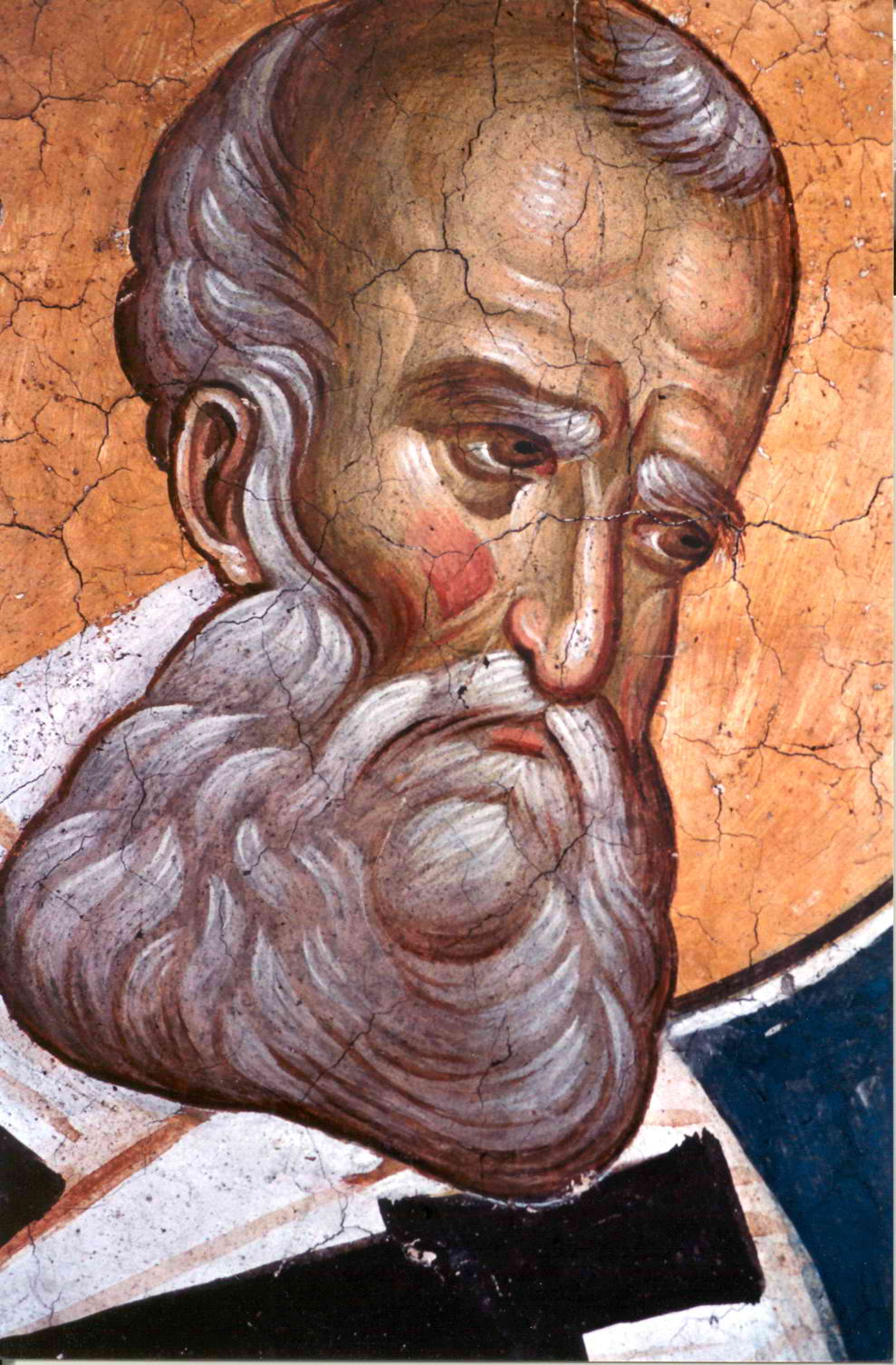
Understanding the Economy of salvation in Christ holistically, St. Gregory Nazianzen stated: “What is not assumed is not healed.” What St. Gregory meant is that it is the very act of Incarnation which initiates salvation in that the eternal Son takes on human nature completely, and if it were not so then human nature would not be healed. In other words, righteousness considered as such would not be sufficient for our salvation, which was the soteriological problem of the Arian heresy. They affirmed Christ’s sinlessness, but denied His true and complete divinity by claiming He was merely a creature, and thus denied man’s participation in the very Life of God by reducing it to participation in the life of some mere, albeit special, creature. Since He was, according to the Arians, a perfectly righteous creature, we can see that merely being righteous is not sufficient for man’s total salvation. By being united with Christ God in His very Person, however, His divine attributes become ours through participation (2 Peter 1:4). This is why it is said: What Christ is by nature (divine), we become by grace (divine).

The imputed righteousness of Christ, according to Orthodoxy, has an ontological ground and consequently an existential character. Christ actually imparts the energy of His righteousness into us, enabling us to grow in real sanctification because of His Spirit's working from within us. Yes, the imputed righteousness is an objective and legal fact (centered in the Cross and based on the entire economy of Christ from Incarnation to the sending of the Holy Spirit) that we can take confidence in, but it is not ontologically antinomian. Rather than merely “describing” or “labeling” us as righteous, it is something imparted, something that transforms us from within, from the ground of our being, and which thus extends through the entire activity of our being, influencing thought, word, and deed. Imputation is coextensive with impartation. This is related to the emphasis in Orthodoxy on theosis, for Christ did not merely or only accomplish something in the past whose consequence is felt today as if it were a soteriological tidal wave stretching across two millennia, but instead is right now imparting the Spirit. What happened on the historic Cross is inwardly and presently connected with the living and present Christ such that its effects are given now by the Living Christ who sends the Spirit now.

Faith is the very life of God in the soul such that, to the degree one trusts in and relies on the Lord, to that degree one has God’s life within. It is the energy of this divine Life within us which has a soteriological effect on us. It is the living Christ within us which causes us to live and to have life, and thus salvation is not effected by divinely legal labels as if the Law of God could be reduced in scope to such things. The Life of God must be present in the soul, and His presence cannot help but produce sanctifying effects. This is what faith touches and is the very expression of. Faith is not merely or fundamentally some finite dogmatic content considered as ideational knowledge, that is the faith of demons (James 2:19). Although dogmatic content is necessarily involved in faith, considered in itself faith is a living energy. It is the energy of trusting, relying, and leaning on that which the dogmatic content points to, and which cannot be reduced to the merely ideational (or empirical). And it grows. Faith is something that moves, lives, and breathes with the life of God, the very Life of God in the soul of man. This is the sense in which Paul states that he seeks and is at pains to have Christ formed within a person (Galatians 4:19).

Concerning Christ’s taking on the whole of human nature, it is vital to remember that He is eternal God. Therefore, Christ is sinless intrinsically and by nature. Sin according to Orthodoxy is not merely considered rule-breaking, but is the consequent manifestation of the soul's prior inward alienation from God. God is Life and Light and Goodness, and so sin is what happens as a consequence of the heart, soul, and mind first turning away from Life and Light and Goodness, from God. Without Goodness, the soul is bound to sin as a consequence of a lack of said Goodness. Without Light, the soul is bound to grope in darkness as a consequence of its lack of Light. Without Life, the soul is bound to death, again, as a consequence of the lack of Life. It is not that one sins and as a consequence God removes His Life, Light, and Goodness from the soul; no, one turns from God and therefore foregoes Life, Light, and Goodness and consequently has no option outside of Death, Darkness, and Sin.

The mind is darkened by the passions, by the tumult of inner thoughts, feelings, and emotions, and, as we succumb to the darkening energy of the passions, as we turn from the Light of God, sin is the inexorable result. The Fall in this sense means that we are predisposed at birth towards the darkening engendered by the passions such that our minds are beclouded and fail to respond to God, and so as sinful creatures our soul is finally exhausted and overpowered by death. In other words, our sinful acts are a consequence and expression of our Fallen, sinful being, and thus it is not that our sinful acts corrupt our nature, but that our fallen human nature corrupts our acts.

Christ’s sinlessness, according to the same principle, is thus a consequence of His being, and not of His acts considered as such. Act follows being, act proceeds from being, and, conversely, being precedes act, which is to say being is the ground of action, and so His pure Being produces pure Act, and our Fallen being produces corrupt act, indeed corrupts all of our acts. It is the law of sin bound up with our being that produces our sinful acts (Cf. Rom 7:23, 7:25, 8:2), and which for the sake of Atonement requires the death of our death, and not merely the clearing away of our sin. Christ gave us much more than a clean slate.

Though of course Christ was and is sinless, some Orthodox theologians may shy away from emphasizing this, in a certain manner of speaking, for fear of giving the impression that His sinlessness was obtained by some virtue other than His intrinsically holy Being. Jesus is sinless because He is an intrinsically holy, divine Person, and thus, even considered as Incarnate, He is not sinless simply because He managed to avoid sinning. We, however, are sinners, though not because we sin, and even if we avoid sinning. We sin because we are sinners, Fallen and in need of a Savior. Sin is, as said above, not merely rule-breaking; sin, considered as an act, is the result of alienation from God, and not something that causes a rupture with God as if consequent to the sin. We come into the world Fallen, which is to say in the condition of being sinners, prior to any act of sin. Our sins are a result of our inward alienation from the Life of God, and so the principle of sin, which is to say death, working in us therefore “predates” any particular instance of sin.

Concerning the Protestant emphasis on the forensic aspect of Christ’s imputation of righteousness, it is true to say that Christ’s righteousness is imputed to us in a legal manner, but it is likewise necessary to stress that it is not “merely” legal. Biblically, the Law is not anything like our contemporary sense of secular law, centered in the courthouse with teams of lawyers seeking arbitrary loopholes to often arbitrary laws. The Law of God is not centered in the courthouse, but in the Temple; the Tablets of the Law were in the Ark of the Covenant, in the Holy of Holies. In other words, the Law of God understood Biblically is an expression of God’s will, which is an expression of His simple nature, and thus speaks to the nature of the whole reality of His Person and the manner of relation both with Him and the humans who are made in His image, and also with the world He created. As St. John of Damascus states in his work On the Orthodox Faith: "The Divinity is simple and uncompounded."

The foregoing is why the Orthodox tend not to stress the merely legal imputation, though it would be improper to reject the legal aspect as long as it is understood in its fuller, theological sense. Christ therefore gives more than merely some righteousness which He possesses; He gives us Himself and thus everything which is His becomes ours. It is He who lives in us, and thus His righteousness lives in us by virtue of Him being present in us, and not as though righteousness were a detachable object or impersonal imputable substance which He places in us as if from afar. Rather, He comes to indwell us and to make His imputed righteousness operate within us organically as it were from within Him who is within us.

What is more, God is not Omnipotent Judge only, for He is also Life, Light, Love, and Wisdom, and since God is “simple,” which is to say that He is not inwardly divided in Himself according to His Attributes but is a unity, God’s Law is thus not merely an expression of absolute Authority, but also of Life, Light, Love, and Wisdom. Therefore, to stray from the Law is to stray from Life, Light, Love, and Wisdom. As man fails to keep the Law, he also fails to attain Life, Light, Love, and Wisdom. These are divine Attributes, and they are also existential realities. It is thus not merely an issue of obedience, but of actually touching Life, Light, etc. Therefore, Christ’s fulfilling of the righteousness of the Law on our behalf is not merely a legal correction, but a much deeper and more comprehensive Atonement that is bound up with transmitting Life to those who are dead, Light to those in darkness, Love to those who are lost, Forgiveness to those under wrath, and Wisdom to those bound by ignorance. This is all a single action of Christ viewed under several different headings; we distinguish them in our mind, but in reality they are one.

In light of the foregoing, it is finally worth stressing that it is not so much that humans have a sin problem, but that, as Father Seraphim Rose once stated, we have a death problem. The consequence, which is to say the penalty, of sin is death, and so the reason sin is such a problem is because it inexorably ends in death; it is the very principle of death working itself out in our souls. And since the sin in us is the power of death working itself out in us, sinful acts are the expression of this principle of sin and death at work in the soul. Christ, being God in the flesh, goes down into death, takes on the consequence and penalty of sin which is none other than death and, since He is Life, defeats death by His death, His intrinsic Life exploding death from within. Thus He, the Living One, emerges from the Tomb in Resurrection, Ascends to heaven, Sits at the Right Hand of the Father, and then Sends the Holy Spirit to us to feed us this His eternal life via the Eucharistic life of the Church. He took on our death so that His Life can become our life, for "what is not assumed is not healed." Thus it is vital to remember that Christ’s sinlessness is a necessary consequence of Who He Is, the Living One, and thus, because of Who He Is, what is by nature His, i.e. Eternal Life, becomes ours through our faithful participation in Him.

-Fr. Joshua Schooping
This series on Penal Substitutionary Atonement continues here, here, here, and here.

Saturday, January 16, 2016

An Analysis of Trangenderism: Its Logical Impossibility

If a biological male identifies as a woman, his association with womanhood must include the possibility that a biological female can equally identify as a male.


Therefore, since biological maleness is not indicative of male identity, the biologically female factors that are being sought are rendered no longer indicators of the female gender identity being identified with.

The sword cuts both ways.


Since according to this logic biological sex is not an indication of gender identity, then in no way could a biological male actually identify with the biologically female form in order to appropriate a female identity.


By disjointing sex and gender, it renders it impossible to identify sex with gender, and so a male identifying with a female form does nothing to appropriate female identity, because the female form is no longer the locus of the female identity.


But if the biological form is indicative or determinative of gender identity, then the form's biological fixedness would render the gender identity impossible to appropriate by someone not of that form.


By making one's own biological form non-indicative of one's gender identity, it renders the other form equally non-indicative.


Therefore, appropriation (e.g. through surgery or hormone treatments) of another biological form becomes intrinsically meaningless in terms of appropriating any corresponding gender identity, for according to this theory there is no gender corresponding to any biological form.


In attempting to liberate one’s identity from one's own form, one has simultaneously cut themselves off from meaningfully appropriating the other identity because that identity can no longer be linked to any corresponding form.

Since, according to this theory, the female form has no intrinsic female identity, then adopting the female form does not succeed in appropriating the female identity.

Thus the man who attempts to claim he is a female has become absurd, for if his form is not indicative of his identity, then the female form cannot be indicative of a female identity, and no one form can be claimed as indicative of any other identity.

In this way all notions of gender are rendered fundamentally meaningless, for if there is no biological component to gender, then the female and male genders have about as much meaning as the green and blue genders, the seven and twelve genders, and the funny, twirly, soft, and swift genders.

Changing to biological femaleness (a genetic impossibility) therefore does not succeed in appropriating the female identity, because the female identity is no longer intrinsically connected to the female form.

Transgenderism is therefore a logical impossibility which seeks to self-contradictingly determine an identity through a form while denying that form can determine identity. 

Either identity is linked to biology or it is not; if it is linked, then it is impossible to claim the identity of another form; if it is not linked, then no appropriation of the other form will suffice to actually appropriate the other identity.

Friday, October 24, 2014

Without Corruption: A Commentary on the Hymn to the Theotokos


A Commentary on the Hymn to the Theotokos

The hymn in Greek is:
Ἄξιόν ἐστιν ὡς ἀληθῶς,
μακαρίζειν σε τὴν Θεοτόκον,
τὴν ἀειμακάριστον καὶ παναμώμητον
καὶ μητέρα τοῦ Θεοῦ ἡμῶν.
Τὴν τιμιωτέραν τῶν Χερουβεὶμ
καὶ ἐνδοξοτέραν ἀσυγκρίτως τῶν Σεραφείμ,
τὴν ἀδιαφθόρως Θεὸν Λόγον τεκοῦσαν,
τὴν ὄντως Θεοτόκον,
σὲ μεγαλύνομεν.


One translation of the hymn goes as follows:
It is truly right to bless thee, O Theotokos,
thou the ever blessed, and most pure, and the Mother of our God.
Thou the more honorable than the cherubim,
and beyond compare more glorious than the seraphim,
who without corruption gavest birth to God the Word,
thou the true Theotokos, we magnify thee.


Of the above hymn honoring the Theotokos, I have heard a question arise concerning the phrase, “who without corruption gavest birth to God the Word.” The question is over what is meant by: “without corruption.” In Greek the phrase is: τὴν ἀδιαφθόρως Θεὸν Λόγον τεκοῦσαν. The key term is τὴν ἀδιαφθόρως. But, beyond “corruption,” “stain,” or defilement,” what does this term mean to say? In short, it means that in some sense Mary herself was not corrupt in giving birth to the God the Word. Yet this doesn't answer the question of in what sense she was ἀδιαφθόρως.

For example, to illustrate the question, if I receive the word of one person and then deliver it to another, and if my memory is incorrupt, then I deliver this word without corruption. If I am without corruption in delivering the message, then what is precisely not corrupted is the message, not me. In other words, I am not the primary referent, whereas the purity of the message is. Praising the purity of the message is the true praise of the deliverer of said message, and so the praise of the deliverer is in this sense indirect. In other words, I deliver the message purely and without any diminution, and so my personal purity is not what is at question (though it could be), for the whole issue is not precisely “about me,” but about the message. The lack of corruption is not, then, primarily referring to my memory, or even to my delivery, per se, but to the purity of the message delivered. It is the message which is ultimately what is delivered incorrupt. 

Now, in reference to the hymn in question, could this be the case regarding the Theotokos? Is her incorruption not, say, a reference to her act of giving birth, to the act of delivery in and of itself, or even to her own purity, per se, but to the Word’s complete entry into humanity, an entry in which He is not diminished in any way? Of course, it is affirmed that Mary is without sin, but the question as I see it is whether this particular verse of the hymn is concerned with affirming this fact of her personal purity at this particular point.

One reason the question is important is that some have said that Mary’s act of birth was not defiled by her personal sin, and that it is a reference to her being pure in herself in the act of giving birth to God the Word. Now, I believe she was sinless in giving birth to God, but I think if this hymn is made to be a reference to this her purity, in this particular way, then it could lead to some problems regarding birth, the purity of women in childbearing, etc. It could be taken to mean that giving birth in some sense could defile a person, and that in Mary’s case it happened that she was not defiled in giving birth. But now we have to answer why giving birth would involve defilement, which is absurd, and so probably not what the hymn is referring to. It could then be pushed back to a critique of holy matrimony, where the act of having children is said to be the source of some corruption, and so Mary is said to be “pure” and “incorrupt” in giving birth simply because she did not have marital relations, which then opens the door to all kinds of problems about the nature of marriage and the act of having children, but we know that Paul in Hebrews 13:4 says the marriage bed is undefiled(ἀμίαντος).

So, in what sense is the verse from the hymn under discussion referring to the Theotokos as ἀδιαφθόρως? Well, there are a couple clues. The first is the deceptively simple observation that the hymn never actually speaks of “Mary” by name. The hymn is to the Theotokos, to the “bearer of God.” The significance is found in that Theotokos is generally understood to be the result of Christological reflection, not Mariological reflection. It is not primarily a reference to Mary, but is primarily a reference to Christ via Mary. It is an affirmation that Mary fully bore God the Word, and not just a human nature. As such, the hymn to the Theotokos is a hymn praising Christ through Mary as Theotokos. It is not a hymn of praise to Mary’s personal piety and purity, per se, but to the Mystery of God’s taking on of human nature.

The second clue is that in this hymn the God-bearer is said to be “more honorable than the Cherubim, and more glorious beyond compare than the Seraphim.” Why? How can she be said to be greater than these exalted beings? Well, the following words of the hymn indicate an answer, but before looking at them it would help to first reflect on the matter. In a very simple sense, what do angels do? Among other things, angels deliver God’s Word and communicate God’s will. The Theotokos, however, did not merely speak the words of the Person of God, as angels do, nor did she merely communicate God’s will and intention to human beings, as angels also do, but was a conduit for the Person of God Himself, which is an action categorically superior to that of the angels. It is therefore not mere hyperbole that says the Theotokos is more honourable than the Cherubim and more glorious beyond compare than the Seraphim, for the statement of praise is simply one of theological fact: the Theotokos did something that angelic beings simply cannot do, and so her status relative to the angels is truly “beyond compare.” 

The reason for the comparison in the first place is that they both deliver God’s Word, but the Theotokos delivers without any diminution, for she delivers the entire Person of the Word God. This, I believe, is what is actually meant by ἀδιαφθόρως. Her delivery of God into humanity is truly without any corruption, and the taking on of flesh in no way diminishes the completeness and the fullness of God’s presence in human form, the form borne by the Theotokos. This, then, resolves the problem of trying to see Mary’s personal purity as being what is at stake in the hymn. It is not a reference to the act itself of giving birth, nor to the act of the marital conception of children, but to the utter fullness of God who took flesh through her. 

The absence of corruption in the Theotokos is thus following upon the statement honouring and glorifying her beyond the angels, for their delivery of God’s word is necessarily partial whereas the Theotokos’ is anything but partial. She received the whole Person, and she gave birth to the whole Person. In other words, the giving of God flesh did not reduce Him in any way. Not then a reference to her exalted personal purity, the sense, therefore, in which she is  said by the hymn to be “incorrupt” in giving birth to God the Word is made clear: She gave birth to nothing less than the whole Person of God the Word. And so the phrase can be read: “More honorable than the cherubim, and more glorious beyond compare than the seraphim, [for] without corruption you gave birth to [the whole Person of] God the Word [in the flesh]. True Theotokos we magnify you!”