Orthodox responses to the Reformation, whether this be the official responses to Lutheranism or Calvinism, take issue with several basic Protestant positions, but what is not among them is a critique of Penal Substitutionary Atonement. In fact, Patriarch Jeremiah II wrote to the Lutherans, urging them to “consider the following” Orthodox view of the Atonement:
One might see a bandit or criminal being punished, and the king himself give his beloved, only-begotten, and legitimate son, who was not like that, to be put to death, transferring the guilt from the wicked man to the son in order to save the condemned criminal and rid him from an evil reputation. (Augsburg and Constantinople, First Exchange, pg 41)
The foregoing from the Patriarch, having quoted from St. John Chrysostom's homily on 2 Corinthians, is one of the oldest and most common examples of penal substitutionary atonement. In it we see one who is being justly punished according to the king's law, but instead of final destruction the king rather puts in that criminal’s place his own innocent son, to receive the condemned man's guilt and be punished in his place in order to save him. This is obviously an illustration of Penal Substitutionary Atonement, where the Father places His willing Son onto the Cross, the place of the cursed criminal, in order to undergo that criminal’s just punishment, and in order to set him free. The Patriarch continued:
If, then, after these things the son were raised up to great authority after he had saved [the offender], and then he was insulted in his unspeakable glory by the one on whose behalf he had been punished, would not the latter prefer to die a thousand deaths, if he had any intelligence, rather to appear to be responsible for such great ingratitude? (ibid)
Not only does Patriarch Jeremiah not distance himself from PSA, he expressly casts it in terms of salvation and being punished on the criminal’s behalf. This is clearly a vicarious atonement, one which is legal and therefore forensic, and it is substitutionary in that it is in the criminal’s place and undergoing the criminal’s own punishment. The Son of God was punished with the just punishment of sinners, willingly standing in the place of the condemned, out of love, and in order to redeem them. Rather than refuting a so-called Protestant notion of Penal Substitutionary Atonement, the Patriarch presents it as the Orthodox view. Rooted in the Old Testament sacrificial system, according to the Orthodox view presented to the Lutherans:
The slaying of animals and the golden and silver vessels were offered to God by the ancients. The body of Christ clearly includes both. For He was slain for the glory of the Father. (ibid, 66)
The foregoing not only affirms that Christ’s death must be understood in terms of the legal and substitutionary sacrifice for sin, and so penal in nature, it is also presented in the context of an explanation of the Eucharist. In this way it is the sacrificial system of the Old Testament which provides the framework of meaning for holy Communion, and so holy Communion itself is understood in terms of Penal Substitutionary Atonement. Christ is the sacrificial Lamb “consecrated to God from the beginning. He was an offering to Him because He is the only-begotten, and because the bread is changed into the very body of Christ” (ibid). The bread is changed into the Body of fallen man’s penal Substitute.
The issue is so non-controversial for the Patriarch between the Orthodox and the Lutherans, that despite two additional exchanges where points of contention are maintained and discussed at length, the question of Christ being our Penal Substitute is dropped, never once figuring as a point of disagreement. It is, moreover, these exchanges which inform and are absorbed as part of the Confession of Dositheus as affirmed in the Synod of Jerusalem (1672). Again, Penal Substitutionary Atonement is a non-issue, and in the 8th Decree it is tacitly presumed as part of the Orthodox understanding of the Atonement. Christ, as Mediator:
In giving Himself a ransom for all He hath through His own Blood made a reconciliation between God and man, and that Himself having a care for His own is advocate and propitiation for our sins. (Decree 8)
Again, in light of the known teachings of the Reformers, Dositheus affirms that Christ is the propitiation for our sins, that He hath given Himself sacrificially, and that through His blood He hath made a reconciliation between God and man. This is all penal substitutionary language, and in light of his awareness of Patriarch Jeremiah’s prior exchanges, Dositheus not only does not distance Orthodoxy from PSA, he rather continues to present it as normative. Dositheus affirms that the Eucharist itself, being the Body and Blood Christ, “is a true and propitiatory Sacrifice offered for all Orthodox” (Decree 22). In other words, although not suggesting that the Eucharist is a “second” or “re-” sacrificing of Christ, the sacrifice of the Eucharist must be understood in terms of that type of sacrifice which propitiates God’s just wrath against sin. The legal and sacrificial aspect of Christ’s death is thus again shown to be informed at a basic level by PSA, and to be incorporated into the Orthodox understanding of holy Communion itself.

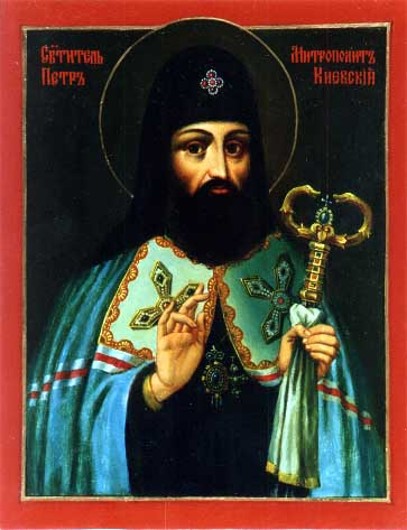
Later, Peter Mogila in the 17th Century, again confirmed PSA as part of Orthodox understanding of the Atonement. From his Answer to Question 24:
He calls Christ a Priest, because he offered himself to God and the Father : saying, Who through the eternal Spirit, offered himself without Spot to God. And again, So Christ was once offered to bear the Sins of many.
In other words, Christ bore our sins. He not only bore death, but sins. And He offered Himself a spotless sacrifice for those sins according to the forensic logic of the Old Covenant sacrificial system, which is penal and substitutionary. And again showing the connection with the Eucharist, in question 107 he answers:
The Fruits of this Mystery are chiefly these : — First, A Commemoration of the Sufferings and of the Death of Christ ; wherewith he was afflicted, not for his own, but for our Transgressions : As saith the Scripture (I Cor. xi. 26), As often as ye eat this Bread and drink this Cup, ye do shew the Lord's Death till he come. Secondly, This Mystery is a Propitiation, or Atonement with God, for our Sins.
The very Eucharist is in this way intimately bound up with PSA. Propitiation and Atonement are even made to be as if synonymous. Lastly, although it is a longer quote, in answer to Question 47 Mogila answers in terms again clearly within the framework of PSA:
That the Death of Christ was abundantly more excelled, and of far greater Benefits, than could be the Death of all other Men: For these especial Reasons. First, Because of the heavy Burden of our Sins, as saith the Prophet (Isaiah 53:4), He hath home our Griefs and carried our Sorrows, yet we did esteem him stricken, smitten of God, and afflicted. But he was wounded for our Transgressions, he was bruised for our Iniquities. Also the Prophet Jeremiah, speaking in the Person of Christ (Lamentations 1:12), Is it nothing to you, all ye that pass by? Behold and see if there be any Sorrow like unto my Sorrow, which is done unto me. Secondly, For that on the Cross he fulfilled his priestly Office, offering himself to God and the Father, for the Redemption of Mankind : as the Apostle speaks concerning him (1 Timothy 6:6), Who gave himself a Ransom for all. And again (Ephesians 5:2), Christ loved us, and hath given himself for us, an Offering and a Sacrifice to God, for a sweet-smelling Savour. Also in another Place (Romans 5:8), While we were yet Sinners, Christ died for us. Thirdly, Because on the Cross he completed the Reconciliation which he had undertaken between God and Man; as the Apostle just mentioned declareth (Colossians 1:20 and 2:14), By him to reconcile all Things unto himself, having made Peace through the Blood of his Cross; Blotting out the Handwriting of Ordinances that was against us ; which was contrary to us; and took it out of the Way, nailing it to the Cross.
To conclude, not only do these 16th Century Orthodox responses to Protestantism not distance themselves from PSA, they positively incorporate it as a natural part of Orthodox teaching on the Atonement. Peter Mogila in the 17th Century also clearly maintains this Orthodox understanding in the same era of controversy with the Protestants. Although in the very context in which a denial of PSA would have been called for, it is was yet affirmed and maintained by Patriarch Jeremiah, Patriarch Dositheus, and Metropolitan Peter Mogila. In light of this and the previous studies, it has been conclusively shown that PSA is natural to Orthodoxy, historically, theologically, and sacramentally. What is therefore unnatural is the contemporary attempt at seeking to erase it from the memory of Orthodox Christians and to represent it as a foreign, modern, and heterodox development. Nothing is further from the truth, and as such the attack against PSA is an attack against the Orthodox understanding of the Gospel.
-Fr. Joshua Schooping