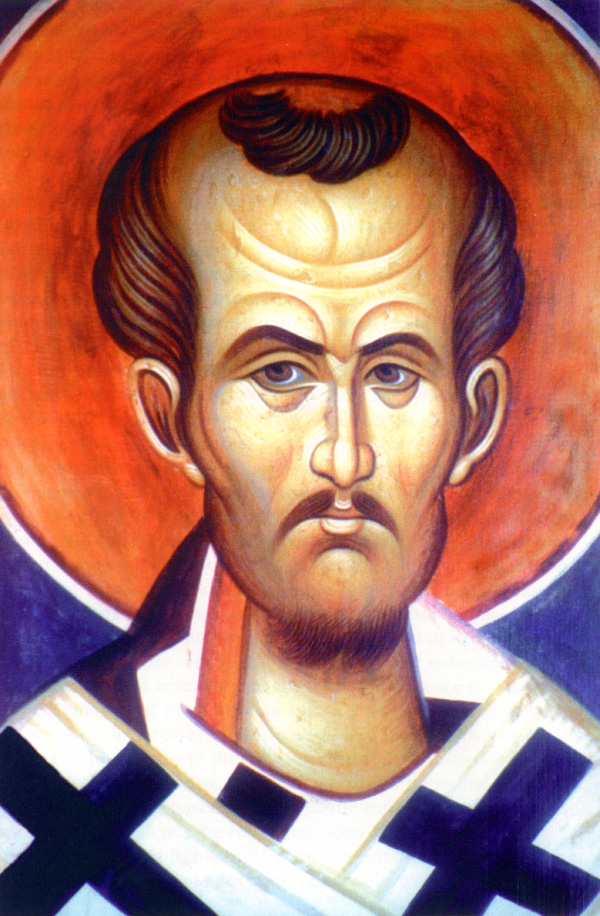
Showing posts with label John Chrysostom. Show all posts

Saturday, April 17, 2021

The Jesus Prayer and Six Promises of God: The First Promise

The full form of the Jesus Prayer, “Lord Jesus Christ, Son of God, have mercy on me, a sinner,” incorporates at least six biblical promises. These are:


1. Romans 10:9 — If you confess with your mouth the Lord Jesus and believe in your heart that God has raised Him from the dead, you will be saved. (cf. John 6:40; Romans 10:10-13)


2. 1 Corinthians 12:3 — No one can say “Jesus is Lord” except in the Holy Spirit. (cf. John 15:26)


3. 1 John 5:1 — Everyone who believes that Jesus is the Christ has been born of God, and everyone who loves the Father loves whoever has been born of him. (cf. Matthew 16:16-17)


4. 1 John 4:15 — Whoever confesses that Jesus is the Son of God, God abides in him, and he in God. (cf. 1 John 2:23; Romans 8:16-17)


5. John 14:14 — If you ask me anything in my name, I will do it. (cf. John 14:13, 15:16, 16:23-24)


6. 1 John 1:9 — If we confess our sins, he is faithful and just to forgive us our sins and to cleanse us from all unrighteousness. (cf. Luke 18:14)


 On The First Promise

Calling on the Name of the Lord is of the essence of Christian faith, because it is fundamentally a looking away from self and a looking towards God. And God’s promise to save those who call on Him in faith and truth, being irrevocable, make calling on the Name of God perhaps the most fundamental religious act of Christianity. Christ also promises: “And I, when I am lifted up from the earth, will draw all people to myself” (John 12:32). In other words, the inward drawing towards Christ that the faithful experience in their heart is in truth caused by, is the result of, Jesus’ drawing of them to Himself. To be more pointed, faith itself is a gift of God’s drawing, as received through the preaching of the Gospel, as St. Paul indicates: “For by grace you are saved through faith, and this is not from yourselves, it is the gift of God” (Ephesians 2:8). In other words, faith itself is a gift of God divinely worked into the human heart, as St. John Chrysostom affirms, commenting on the just-quoted passage: “Neither is faith, he means, ‘of ourselves.’ Because had He not come, had He not called us, how had we been able to believe? For ‘how,’ saith he, ‘shall they believe, unless they hear?’ (Romans 10:14) So that the work of faith is not our own.” Blessed Theophylact likewise teaches on this verse, that “not even our faith originates from us,” and that “even the faith itself which we have shown is a gift from God.” This is made possible because the Gospel is itself “God's power for salvation to everyone who believes” (Romans 1:16). Moreover, “if thou shalt confess with thy mouth Jesus as Lord, and shalt believe in thy heart that God raised him from the dead, thou shalt be saved” (Romans 10:9). But saved from what? The wrath of God which is to be revealed on the Last Day, as St. Paul teaches of “Jesus, who delivers us from the wrath to come” (1 Thessalonians 1:10). Faith in the risen Christ therefore delivers us from the wrath of God against sin: “For the wrath of God is revealed from heaven against all ungodliness and unrighteousness of men, who by their unrighteousness suppress the truth” (Romans 1:18). In this light, calling faithfully on the Name of the Lord is a wonderful and precious promise. It is no trifle, for God’s promises are irrevocable. Therefore, call upon God ceaselessly as His gift of faith is worked into your heart. Let this faithful calling be a constant attitude of your soul, so that you might live the New Life in Christ more and more fully until the coming Day, “that day when, according to my gospel, God judges the secrets of men by Christ Jesus” (Romans 2:16). And that you be found among the saints “together with all those who in every place call upon the name of our Lord Jesus Christ, both their Lord and ours” (1 Corinthians 1:2).


-Fr. Joshua Schooping

Friday, February 7, 2020

Penal Substitution: St. John Chrysostom on 2 Corinthians 5:21

Patriarch Jeremiah II, in his First Exchange with the Lutherans, quoted from St. John Chrysostom on the Penal Substitutionary Nature of the Atonement. It was too long to place within the context of the previous study which treated more directly with Patriarch Jeremiah, and so is put here for reference and edification. What follows below is St. John Chrysostom's commentary on 2 Corinthians 5:21:

For Him who knew no sin He made to be sin on our account.


'I say nothing of what has gone before, that you have outraged Him, Him that had done you no wrong, Him that had done you good, that He exacted not justice, that He is first to beseech, though first outraged; let none of these things be set down at present. Ought ye not in justice to be reconciled for this one thing only that He has done to you now?' And what has He done? Him that knew no sin He made to be sin, for you. For had He achieved nothing but done only this, think how great a thing it were to give His Son for those that had outraged Him. But now He has both well achieved mighty things, and besides, has suffered Him that did no wrong to be punished for those who had done wrong. But he did not say this: but mentioned that which is far greater than this. What then is this? Him that knew no sin, he says, Him that was righteousness itself, He made sin, that is suffered as a sinner to be condemned, as one cursed to die. For cursed is he that hangs on a tree. (Galatians 3:13) For to die thus was far greater than to die; and this he also elsewhere implying, says, Becoming obedient unto death, yea the death of the cross. (Philippians 2:8) For this thing carried with it not only punishment, but also disgrace. Reflect therefore how great things He bestowed on you. For a great thing indeed it were for even a sinner to die for any one whatever; but when He who undergoes this both is righteous and dies for sinners; and not dies only, but even as one cursed; and not as cursed [dies] only, but thereby freely bestows upon us those great goods which we never looked for; (for he says, that we might become the righteousness of God in Him;) what words, what thought shall be adequate to realize these things? 'For the righteous,' says he, 'He made a sinner; that He might make the sinners righteous.'  Yea rather, he said not even so, but what was greater far; for the word he employed is not the habit, but the quality itself. For he said not made [Him] a sinner, but sin; not, 'Him that had not sinned' only, but that had not even known sin; that we also might become, he did not say 'righteous,' but, righteousness, and, the righteousness of God. For this is [the righteousness] of God when we are justified not by works, (in which case it were necessary that not a spot even should be found,) but by grace, in which case all sin is done away. And this at the same time that it suffers us not to be lifted up, (seeing the whole is the free gift of God,) teaches us also the greatness of that which is given. For that which was before was a righteousness of the Law and of works, but this is the righteousness of God.
Reflecting then on these things, let us fear these words more than hell; let us reverence the things [they express] more than the kingdom, and let us not deem it grievous to be punished, but to sin. For were He not to punish us, we ought to take vengeance on ourselves, who have been so ungrateful towards our Benefactor. Now he that has an object of affection, has often even slain himself, when unsuccessful in his love; and though successful, if he has been guilty of a fault towards her, counts it not fit that he should even live; and shall not we, when we outrage One so loving and gentle, cast ourselves into the fire of hell? Shall I say something strange, and marvelous, and to many perhaps incredible? To one who has understanding and loves the Lord as it behooves to love Him, there will be greater comfort if punished after provoking One so loving, than if not punished. And this one may see by the common practice. For he that has wronged his dearest friend feels then the greatest relief, when he has wreaked vengeance on himself and suffered evil. And accordingly David said, I the shepherd have sinned, and I the shepherd have done amiss; and these the flock, what have they done? Let Your hand be upon me, and upon my father's house. (LXX: 2 Samuel 24:17) And when he lost Absalom he wreaked the extremest vengeance upon himself, although he was not the injurer but the injured; but nevertheless, because he loved the departed exceedingly, he racked himself with anguish, in this manner comforting himself. Let us therefore also, when we sin against Him Whom we ought not to sin against, take vengeance on ourselves. See you not those who have lost true-born children, that they therefore both beat themselves and tear their hair, because to punish themselves for the sake of those they loved carries comfort with it. But if, when we have caused no harm to those dearest to us, to suffer because of what has befallen them brings consolation; when we ourselves are the persons who have given provocation and wrong, will it not much rather be a relief to us to suffer the penalty and will not the being unpunished punish? Every one in a manner will see this. If any love Christ as it behooves to love Him, he knows what I say; how, even when He forgives, he will not endure to go unpunished; for you undergo the severest punishment in having provoked Him. And I know indeed that I am speaking what will not be believed by the many; but nevertheless it is so as I have said. If then we love Christ as it behooves to love Him, we shall punish ourselves when we sin. For to those who love any whomsoever, not the suffering somewhat because they have provoked the beloved one is unpleasing; but above all, that they have provoked the person loved. And if this last when angered does not punish, he has tortured his lover more; but if he exacts satisfaction, he has comforted him rather. Let us therefore not fear hell, but offending God; for it is more grievous than that when He turns away in wrath: this is worse than all, this heavier than all. And that you may learn what a thing it is, consider this which I say. If one that was himself a king, beholding a robber and malefactor under punishment, gave his well-beloved son, his only-begotten and true, to be slain; and transferred the death and the guilt as well, from him to his son, (who was himself of no such character,) that he might both save the condemned man and clear him from his evil reputation ; and then if, having subsequently promoted him to great dignity, he had yet, after thus saving him and advancing him to that glory unspeakable, been outraged by the person that had received such treatment: would not that man, if he had any sense, have chosen ten thousand deaths rather than appear guilty of so great ingratitude? This then let us also now consider with ourselves, and groan bitterly for the provocations we have offered our Benefactor; nor let us therefore presume, because though outraged He bears it with long-suffering; but rather for this very reason be full of remorse. For among men too, when one that has been smitten on the right cheek offers the left also, he more avenges himself than if he gave ten thousand blows; and when one that has been reviled, not only reviles not again but even blesses, he has stricken [his adversary] more heavily, than if he rained upon him ten thousand reproaches. Now if in the case of men we feel ashamed when offering insults we meet with long-suffering; much rather, in respect to God, ought they to be afraid who go on continually sinning yet suffer no calamity. For, even for evil unto their own heads is the unspeakable punishment treasured up for them. These things then bearing in mind, let us above all things be afraid of sin; for this is punishment, this is hell, this is ten thousand ills. And let us not only be afraid of, but also flee from it, and strive to please God continually; for this is the kingdom, this is life, this is ten thousand goods. So shall we also even here obtain already the kingdom and the good things to come; whereunto may we all attain, through the grace and love towards men of our Lord Jesus Christ; with Whom to the Father, with the Holy Spirit, be glory, might, honor, now and for ever, and world without end. Amen.