Saturday, April 17, 2021

The Jesus Prayer and Six Promises of God: The First Promise

The full form of the Jesus Prayer, “Lord Jesus Christ, Son of God, have mercy on me, a sinner,” incorporates at least six biblical promises. These are:


1. Romans 10:9 — If you confess with your mouth the Lord Jesus and believe in your heart that God has raised Him from the dead, you will be saved. (cf. John 6:40; Romans 10:10-13)


2. 1 Corinthians 12:3 — No one can say “Jesus is Lord” except in the Holy Spirit. (cf. John 15:26)


3. 1 John 5:1 — Everyone who believes that Jesus is the Christ has been born of God, and everyone who loves the Father loves whoever has been born of him. (cf. Matthew 16:16-17)


4. 1 John 4:15 — Whoever confesses that Jesus is the Son of God, God abides in him, and he in God. (cf. 1 John 2:23; Romans 8:16-17)


5. John 14:14 — If you ask me anything in my name, I will do it. (cf. John 14:13, 15:16, 16:23-24)


6. 1 John 1:9 — If we confess our sins, he is faithful and just to forgive us our sins and to cleanse us from all unrighteousness. (cf. Luke 18:14)


 On The First Promise

Calling on the Name of the Lord is of the essence of Christian faith, because it is fundamentally a looking away from self and a looking towards God. And God’s promise to save those who call on Him in faith and truth, being irrevocable, make calling on the Name of God perhaps the most fundamental religious act of Christianity. Christ also promises: “And I, when I am lifted up from the earth, will draw all people to myself” (John 12:32). In other words, the inward drawing towards Christ that the faithful experience in their heart is in truth caused by, is the result of, Jesus’ drawing of them to Himself. To be more pointed, faith itself is a gift of God’s drawing, as received through the preaching of the Gospel, as St. Paul indicates: “For by grace you are saved through faith, and this is not from yourselves, it is the gift of God” (Ephesians 2:8). In other words, faith itself is a gift of God divinely worked into the human heart, as St. John Chrysostom affirms, commenting on the just-quoted passage: “Neither is faith, he means, ‘of ourselves.’ Because had He not come, had He not called us, how had we been able to believe? For ‘how,’ saith he, ‘shall they believe, unless they hear?’ (Romans 10:14) So that the work of faith is not our own.” Blessed Theophylact likewise teaches on this verse, that “not even our faith originates from us,” and that “even the faith itself which we have shown is a gift from God.” This is made possible because the Gospel is itself “God's power for salvation to everyone who believes” (Romans 1:16). Moreover, “if thou shalt confess with thy mouth Jesus as Lord, and shalt believe in thy heart that God raised him from the dead, thou shalt be saved” (Romans 10:9). But saved from what? The wrath of God which is to be revealed on the Last Day, as St. Paul teaches of “Jesus, who delivers us from the wrath to come” (1 Thessalonians 1:10). Faith in the risen Christ therefore delivers us from the wrath of God against sin: “For the wrath of God is revealed from heaven against all ungodliness and unrighteousness of men, who by their unrighteousness suppress the truth” (Romans 1:18). In this light, calling faithfully on the Name of the Lord is a wonderful and precious promise. It is no trifle, for God’s promises are irrevocable. Therefore, call upon God ceaselessly as His gift of faith is worked into your heart. Let this faithful calling be a constant attitude of your soul, so that you might live the New Life in Christ more and more fully until the coming Day, “that day when, according to my gospel, God judges the secrets of men by Christ Jesus” (Romans 2:16). And that you be found among the saints “together with all those who in every place call upon the name of our Lord Jesus Christ, both their Lord and ours” (1 Corinthians 1:2).


-Fr. Joshua Schooping

Tuesday, March 30, 2021

The Biblical Case for Why Masks in the Church Assembly are Unethical

Following the previous articles, here and here, which treat of fundamental issues regarding any purported relationship between Covid and the Church, another much overlooked reason why masks are inappropriate in the Church assembly is that it violates a basic principle of God’s Law.


Leviticus chapters 13 and 14 give the Lord’s instruction on how to treat those who may be sick with an infectious disease. In short, those sick or potentially sick with an infectious disease are always instructed to be quarantined. The basic principle is given thus:

And the priest shall examine the disease and shut up that which has the disease for seven days. (Leviticus 13:50; cf. Leviticus 13:4-5, 21, 26, 31, 33, 54)

Furthermore:

He shall remain unclean as long as he has the disease. He is unclean. He shall live alone. His dwelling shall be outside the camp. (Leviticus 13:46)

In other words, the medical principle is that of quarantining the sick. Moreover, the sick may require some sort of marker to identify them as sick, so that people know to be careful:

The leprous person who has the disease shall wear torn clothes and let the hair of his head hang loose, and he shall cover his upper lip and cry out, 'Unclean, unclean.' (Leviticus 13:45)

Not only are his clothes and hair to reflect his condition, notice also that he is supposed to cover his upper lip, which could be construed as a kind of masking. It shows an awareness of infectious diseases passable through the nose and mouth to others.


The fundamental distinction at play here is between clean and unclean:

And the priest shall examine him again on the seventh day, and if the diseased area has faded and the disease has not spread in the skin, then the priest shall pronounce him clean; it is only an eruption. And he shall wash his clothes and be clean. (Leviticus 13:6; re: clean, cf. Leviticus 13:13, 17, 23, 28, 34, 37, 39-41, 58-59; re: unclean, cf. Leviticus 13:3, 8, 11, 14-15, 20, 22, 25, 27, 30, 36, 44-46, 51, 55, 59)

Nowhere do we see those without symptoms commanded to dress or be treated as if they are sick.


We do have a case where the clean are commanded to leave the location of a possible unclean disease: 

Then he who owns the house shall come and tell the priest, "There seems to me to be some case of disease in my house." Then the priest shall command that they empty the house before the priest goes to examine the disease, lest all that is in the house be declared unclean. And afterward the priest shall go in to see the house. (Leviticus 14:35-36)

But this does not connect even remotely to the principle of marking the sick with torn clothes, loose hair, or face covering. It also shows that the clean, who were in the presence of a potentially unclean location, were not instructed to quarantine themselves or take the markers of uncleanness. Nor do we see the priest being commanded to cover his face.


What is implicit in the distinction between clean and unclean is the idea of separation. In other words, clean and unclean should not be confused. What is diseased is to be distinguished from the apparently well, and they are not to be treated alike. The markers of the clean are not to be given to the unclean, nor the markers of the unclean to the clean. It is similar to men’s and women’s clothing:

A woman shall not wear a man's garment, nor shall a man put on a woman's cloak, for whoever does these things is an abomination to the Lord your God. (Deuteronomy 22:5)

Confusion of such fundamental distinctions is an abomination, which is a principle at the heart of God’s condemnation of homosexuality:

You shall not lie with a male as with a woman; it is an abomination. (Leviticus 18:22)

And:

If a man lies with a male as with a woman, both of them have committed an abomination; they shall surely be put to death; their blood is upon them. (Leviticus 20:13)

In other words, the Biblical point at hand is that to confuse what God distinguishes, or to separate what God sees as one (as the concept of race implicitly does to humanity), both alike are an abomination. Thus, to put the markers of the unclean on the clean is similarly abominable:

You shall keep my statutes. You shall not let your cattle breed with a different kind. You shall not sow your field with two kinds of seed, nor shall you wear a garment of cloth made of two kinds of material. (Leviticus 19:19)

Notice that not even the wearing of a cloth garment made of two kinds of material accords with divine law, the point again being to understand that God’s will is unto the preservation of the integrity of each class of persons, animals, and things.


Therefore, at the very least, it is unbiblical to ask people who have no symptoms of an infectious disease to dress in the clothes of those possessing infectious diseases. And to compel them to wear them is godless and unethical.


Lastly, as a final consideration, those who stray from the principle of Christian love and freedom and therein seek to compel God’s people to wear masks in the assembly, not only contrary to the spirit of God’s Law, thereby also break the law of love, for love “does not insist on its own way,” and moreover “bears all things, believes all things, hopes all things, endures all things” (1 Corinthians 13:5, 7).


-Fr. Joshua Schooping


Monday, December 7, 2020

A Virus is an Act of Nature, Not an Act of Man

As obvious as it may sound, a virus is not a man. Therefore, the actions of a virus are not the actions of a man. And what can be said of a virus can be said about bacteria. Their actions are autonomous and distinct from human agency. The actions of viruses and bacteria are acts of nature (sometimes called acts of God).


In terms of liability, which means to be responsible for causation and/or effect, man is not liable for acts of nature. Only in cases of gross negligence or deliberate maleficence, i.e. an absence of reasonable care, in the instrumental use of nature can someone perhaps be considered liable for an act of nature. 


For example, if a person has a healthy tree that is struck by lightning, and the tree falls on and damages a neighbor’s property, the owner of the tree is not liable for the lightning strike or the damage caused by it. 


Now, a common objection is inserted here, which is not an objection as much as it is a diversion, that in love a neighbor may or even ought to willingly forego all questions of liability and simply choose to help. This is the important question of compassion. In this case, however, the question of liability is sidestepped, not addressed. 


To better understand, the real principle at work in the foregoing example is more clearly revealed when that same tree, say, injures ten people who were in a tent on the neighbor’s property and who are consequently sent to the ICU for three months and so produce, again say, a twenty million dollar expense. 


This example more clearly reveals the principle at work because at that point the question of love is present, but barring enormous wealth one is simply unable to afford to simply redress the problem through an act of love. Thus the question of liability comes clearer into focus, because although one may want to help that neighbor, most people are not in a position to pay out twenty million dollars. If the injured party tried to sue or otherwise compel compensation, most would agree that a private citizen ought not be held liable for such acts of nature, despite their tragic nature. If they ended up dying because of the lightning struck tree falling on the tent, should the owner of the tree then be considered guilty of manslaughter, if not murder? Would love demand that the owner of the tree willingly go to jail?


The foregoing example, it should also be pointed out, turns on a principle of ex post facto, i.e. already caused, damage. It does not turn on a preventative question as does the vaccine question. In other words, the person is not being held liable for not having priorly cut down a healthy tree. For it is perfectly legal to own a healthy tree.


Again, this is a question of actual liability. It is not a question of what we may want to do or even can do. It is purely a question of what it means to be liable for acts of nature. We may want to help or we may not want to help, we may be in a position to help or we may not be in a position to help, but what is the actual liability? 


Not forgetting the question of compassion raised above, however, and liability being especially a question of justice, I would also contend that this question of justice is also a question of compassion. Because if lightning strikes a tree and tragically harms one’s neighbors, and that neighbor attempts to sue for twenty million dollars in damages and so bankrupts the family and causes them to become homeless, then that now homeless family will wonder why they were made responsible, which is to say liable, for an act of nature, and further why no one has mercy on them. Justice, in other words, is not in principle opposed to mercy, but actually is rooted in mercy and protection against unjust retaliation, false accusations, and overreach regarding claims of liability.


Now, it seems fairly intuitive that a person cannot be made liable for an act of nature, and although the example given above is that of lightning striking a tree, the same principle applies to the acts of a virus or bacteria. For example, if someone cooks a bad batch of food and those who eat the food get sick, the cook is not then liable, if it can be shown that there was no negligence on his part and that reasonable care was maintained in its preparation and delivery. Just like the striking of lightning, acts of nature happen, and although tragic, liability is not then simply transferred to the nearest person.


In this light, a healthy person acting normally, and with reasonable care, cannot be held liable for the acts of a virus. He is right to refuse any responsibility for the acts of non-human agents. Therefore, it would be unjust for mandatory or compulsory vaccinations even in the case of contagious diseases. Those who are infected and contagious demonstrate reasonable care by quarantining themselves, but those who are healthy are not liable for acts of nature, and so cannot be subject to involuntary medical intervention, or penalized for refusal, on the basis of acts of nature that are always in principle outside the control of human agency.


In cases where one would suggest the enforcing of maximal preventative measures, the principle would thus demand that all trees be cut down, all hospitals be shut down (since they are a major location of disease transmission, and liability still applies), all restaurants and stores be closed, all windows be made of bulletproof glass, all cars dismantled, all clothing expanded to bulletproof armor, all bicycles be exchanged for tricycles, all airplanes grounded, all fast food chains shut down, all guns removed, all free speech banned, all churches closed, mandatory wearing of steel toed boots and helmets at all times, etc., with the whole world being re-envisioned in terms of these safety and liability considerations… Why? Because the expanded application of liability to all these things would be such that everyone is made responsible for every possible harmful action such that all precautions must be forcibly imposed at all times and in all locations. The absurdity of this is self-evident, as we cannot vaccinate or protect against nature itself, and there is a natural limit to which the human metabolism can even process such things, not to mention human psyches and societies.


A similar situation would be in the case of, say, a guest opening a door, entering a home, and closing the door in a normal, responsible fashion and ignorantly letting in a mosquito that had malaria. The person opening the door is not liable for the actions of the mosquito, and so cannot be held liable in the case where someone in the house contracts malaria. Nor can the owner of the house be held liable for the actions of that mosquito, even though one could maybe argue they could have any number of nets, sprays, and obstacles at the entrance of the home. A person simply cannot be held liable for the act of a mosquito, for it is an act of nature.


In conclusion, just as man does not make the wind blow violently or the lightning strike, neither does he make a disease contagious. This is simply part of the inbuilt danger of the natural, given world. If someone becomes infected, the ancient and established biblical principle of quarantining applies, but, in the case of ostensible good health, no one can be made responsible for the acts of a virus such that they should be made to submit to medical force against their person. A person is liable for their own actions and those which are in their sphere of control, not the acts of nature. An ostensibly healthy person taking reasonable care to maintain normal safety is all that is right to ask of our fellow citizens in any normal environment, but since liability cannot be extended to responsibility for the acts of autonomous entities that act independently of human volition, no one has the right to force vaccinations under any principle that presupposes such a liability.


-Fr. Joshua Schooping


Saturday, October 24, 2020

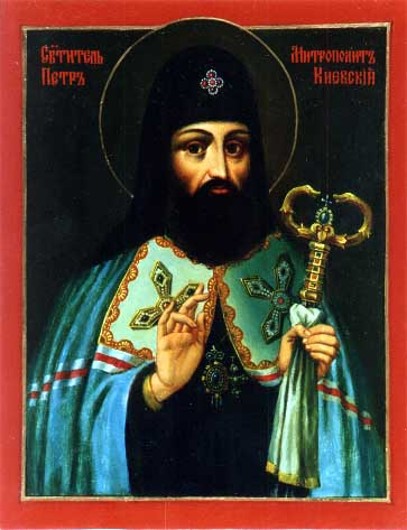
A Short Defense of St. Peter Mogila's Catechism

In the 20th and 21st centuries, as the Orthodox Church in the Anglophone world was deeply engaging with the Church Fathers, translating Patristic and Liturgical texts, it became popular among some to criticize St. Peter Mogila's 17th Century Catechism. There were moments when some Orthodox theologians could be heard declaring that Orthodox Christianity doesn't even "do" systematic theology. In this light, St. Peter's Catechism was seen as too Western, too capitulated to Romanism, and therefore it can be safely ignored and set aside as, at best, a curiosity that bears no meaningful authority.

The problem with this attitude towards the Catechism is that it is truly self-defeating. In order to criticize St. Peter Mogila's Catechism, one ends up criticizing its conciliar nature, and so conciliarity itself. For the document was amended and formally received by the four highest Patriarchates: Constantinople, Alexandria, Antioch, and Jerusalem. Furthermore, it was officially received at the Particular Council of Jerusalem in 1672 held under Patriarch Dositheus. To criticize St. Peter's Catechism is then to criticize these Fathers, to criticize the conciliar nature of its unanimous acceptation, and so to say that the whole Church was capitulated to Romanism. For it is not merely St. Peter Mogila's Catechism; it is claimed as the Catechism of the Orthodox Church itself. What is worse, this criticism ends up treading upon the promise of Christ to the Church, that She cannot fail, and so moves in the direction of unraveling the very fabric of Orthodox ecclesiology.

The Church has never been captive to the Latins. Therefore, for Orthodox Christians to be skeptical towards St. Peter Mogila is for them to be skeptical of the Orthodox Church, and this ends up becoming truly self-defeating. If, in light of its conciliar and formal acceptance, we cannot wholeheartedly embrace and trust the Catechism, then we cannot embrace and trust the Church which produced it and unanimously declared its canonicity, and then, finally, we cannot even trust the contemporary theologians who sought to criticize it. If we cannot trust St. Peter Mogila, and the Patriarchs and Councils which formally approved his Catechism, then we certainly should not trust some 20th or 21st Century theologian who seeks to minimize and diminish its importance. Rather, it looks like those who seek to criticize it have placed themselves in a position contrary to the phronema of the Orthodox Church.

-Fr. Joshua Schooping

Monday, October 19, 2020

Man, Nothingness, and Being: A Short Reflection on How the Gospel Might Speak to Atheism

Man is created in the image of God ex nihilo, out of nothing, and so in a sense when he looks honestly into his soul man sees a double reality: on the one hand the fact of an infinite gaping nothingness, and on the other hand the infinite embracing reality of Being. This internal tension demands and takes an enormous toll on his psyche, and in his fallen state man is ever striving towards being, as if standing precariously on and gripping an impossible incline, ever fearing lest he slip into the bottomless nothingness which he senses, if not recognizes, within himself deep below.


At times the nothingness can appear almost sweet, like an infinite ease, while at other times terrifying in its overwhelming power to destroy, through a kind of inexorable negating power of absence, all meaning, connection, and value. Similarly, at times Being can be reassuring, affirming, and uplifting (as out of the nothing), while at other times seem impossible in its rigid demands, its edges and consequences, terrifying in its overwhelming, overshining presence, like a terrible judge ever threatening to pronounce guilt at one’s inability to live up to reality’s infinite realism. In certain moments these two can seem almost to coalesce, to become as if one, where total absence is an infinite presence, and infinite presence a space beyond the cacophony of things, i.e. of matter and form. 


The urge to atheism that some feel is just this thirsting for truth, real truth, as a radical denial of all pious opinions and romantic ephemera, the urge to acknowledge as meaningful the absolute nothingness which appears as such an inextricable part of one’s experience of being (however paradoxical that may sound). Atheism, in this nearly religious sense, is the denial of infinite Being in favor of infinite nothingness. It is finally a kind of mystical nothingness which moves, even bizarrely and as if against the will of the atheist, towards the recognition of a transcendental fecundity at the heart of all such nihilism. This is the path out of atheism by taking the path through atheism, to recognize that beyond all mythologies and speculations there is a bedrock of reality that, often frustratingly, demands recognition. The reality of nothingness finally becomes reality, becomes presence.


From this vantage, and for some perhaps only from this vantage, one is at last able to see that what was once a pervasive absence is now a pervasive presence, and it becomes undeniable that there is a positive reality which pervades all things, and that this has always been so. In this one is even able to see that at the heart of religious faith there is a kernel of truth, one inadequately married to name and form, to be sure, but one to which name and form can become translucent, transcendental reality accommodating itself to the imperfect minds of men. 


This transcendental reality, moreover, has produced time and space, and so pervades all things while not being touched by them. This transcendental reality even has all power. It stands beyond all name and form, all time and space, all laws and all entropy, and in this the true meaning of God starts to dawn on the mind: That which is beyond, but also within, for in this Truth we live and move and have our being. And even here insight is not exhausted, because, beyond the vagaries of personality, the personhood that stands at the heart of our experience is no longer perceived as merely accidental, but reflective, like a deep echo, of what is true at even the most fundamental level of reality. And so transcendental reality is known not merely as an It, but as Person, and here one stands at the threshold of the transcendental Trinity of Persons: the Origin, the Logos, and the Spirit.


Having created all reality, its very Master, the Logos is able to enter into time and space. Almost as if the Dreamer had entered into his own dream, He entered into the stream of history, time and space offering no resistance to Him. For how could they? And so, having lived perfectly according to the laws of nature, and sensitive to their origin beyond time and space, after dying miserably on a cross it were as nothing for Him to transcend them, as if mocking the law of death that governs all things in this world, by rising from the dead, manifesting the mastery of Being over nothingness. This message echoes throughout the world, that conquering death through dying, passing through nothingness Being is victorious, both in time and in eternity, on earth as it is in heaven: This being the recapitulation of the insight that Being is the fundamental Truth, and that even nothingness gives way to He Who Is.


-Fr. Joshua Schooping


Wednesday, September 23, 2020

Blessed Theophylact on Penal Substitutionary Atonement

Galatians 3:13 states: “Christ hath redeemed us from the curse of the law, being made a curse for us: for it is written, Cursed is everyone that hangeth on a tree” (Gal 3:13).


Commenting on this verse, Blessed Theophylact states:


One might argue: “It is true that he who does not fulfill the law is accursed, and that faith justifies. But how do we know that the curse has been lifted? We fear that having once been under the yoke of the law, we still remain under that curse.” Anticipating such an objection, Paul demonstrates that the curse has been removed through Christ. He paid the price by Himself becoming the curse and thereby redeeming us from the condemnation of the law. Christ (in His human nature) escaped that curse by fulfilling the law, but we, unable to fulfill it, were guilty under the law. This is like an innocent man who chooses to die in place of a guilty man condemned to death. Therefore, Christ accepted the curse of being hung from a tree and thereby loosed the curse to which we are liable for not fulfilling the law. This was a curse that lay upon us, but not upon Him, because He fulfilled the law perfectly, committing no sin.

This comment by Blessed Theophylact echoes that of St. John Chrysostom, who centuries earlier stated of this verse:

In reality, the people were subject to another curse, which says, “Cursed is every one that continues not in the things that are written in the book of the Law” (Deuteronomy 27:26). To this curse, I say, people were subject, for no man had continued in, or was a keeper of, the whole Law; but Christ exchanged this curse for the other, Cursed is every one that hangs on a tree. As then both he who hanged on a tree, and he who transgresses the Law, is cursed, and as it was necessary for him who is about to relieve from a curse himself to be free from it, but to receive another instead of it, therefore Christ took upon Him such another, and thereby relieved us from the curse. It was like an innocent man's undertaking to die for another sentenced to death, and so rescuing him from punishment. For Christ took upon Him not the curse of transgression, but the other curse, in order to remove that of others. For, “He had done no violence neither was any deceit in His mouth” (Isaiah 53:9; 1 Peter 2:22). And as by dying He rescued from death those who were dying, so by taking upon Himself the curse, He delivered them from it.

These two comments both agree in the principle of substitution, where the innocent takes the place of the guilty, dying in his place. In the place of the guilty, Christ received a curse in order to die in his place. Christ received the punishment of the curse in the place of the cursed, and so both of these comments agree on the principle of penalty. In this penal substitution both commentators also agree on the principle of atonement, that Christ paid the price of sin, delivering and redeeming sinful man from the law he was guilty of breaking, having Himself fulfilled the law perfectly. Therefore, both commentators agree to Penal Substitutionary Atonement.


-Fr. Joshua Schooping

Saturday, September 5, 2020

Deal-Breaker: Voting Christian in a Democratic Constitutional Republic

In approaching the intersection between Orthodoxy and voting, it is vital to distinguish between a political personality and a political platform. In a Republic we do not vote for a personality as much as we vote for a platform. To get lost in personality in regards to political advocacy is a cul de sac.


That being said, if a platform explicitly and directly advocates sin, such as the sin of legalized and even federally funded abortion, then to vote in favor of that platform is to endorse and even participate in that sin, and therefore to be guilty of it. This kind of situation is a deal-breaker for an Orthodox Christian. A Christian cannot guiltlessly vote for a platform whose substance includes the explicit advocacy of sin.


The foregoing is different from a situation in which a platform does not advocate some sin, but where some sin may seek to attach itself as a consequence of that platform's position. For the sin which may be consequent to that platform is not necessary to the platform itself. Although the sin may be a result of that platform at the moment, it can be corrected because it is not necessary to the platform itself.


If the position of abortion is a direct platform position of some Party, then it is a deal-breaker for an Orthodox Christian. That does not necessitate a vote for any other Party if that Party also has a Platform for direct advocacy of sin, but it does at minimum remove that other Party with a Platform sin from legitimate consideration for an Orthodox Christian.

At this point a confusion may arise, for it could be the case that, say, the Liberal Party has a better policy than the Conservative Party on some important issue, such as access to medical care. Let's say hypothetically this is the case. Now, the Conservative Party does not have a platform position which programmatically denies healthcare to anyone, but perhaps makes it difficult for some people to receive healthcare as an amenable consequence of their position. In other words, the Conservative Platform does not aim to legalize medical discrimination, even if it could happen that medical discrimination might occur as a result of their policy. If in fact this discrimination was the result, then it would be perfectly consistent with their Platform to also try to solve that or any problem created by their policies.


On the other hand, the Liberal Party has a direct aim to legalize the slaying of unborn children. Therefore, abortion is not an accident, not an unintended consequence of their policy, but a directly intended outcome. Thus, even though they may hypothetically have a better position re: access to medical care, their direct advocacy of abortion makes one voting for them for the sake of medical care yet complicit in every abortion that results from their larger platform.


It therefore does not matter if they have a better policy as regards health care. Infanticide is a sin, whereas voting for imperfect healthcare policies that can be amended through further development is not a sin because one is not voting for the unintended consequences of that policy. One can only be held responsible for what the platform directly and explicitly advocates. Although one is not thereby compelled to vote Conservative because of that fact, it would seem that since no Conservative policy directly advocates for medical discrimination, then voting Conservatively in this instance would not be the advocacy of any sin. Voting for the Liberal Party and its abortionistic Liberal Platform, however, certainly leaves the blood of dead infants on one's hands.


-Fr. Joshua Schooping